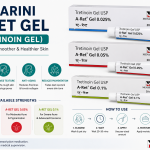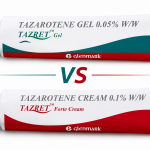

Tazarotene is a topical retinoid used to treat both acne and plaque psoriasis, and it’s considered one of the more potent options in its class. If you’re using it for breakouts, patience matters — most people don’t see meaningful improvement until around the four-week mark, even though the medication is working beneath the surface earlier than that. It’s a prescription-only treatment, sold under brands manufactured by Allergan, and comes in both gel and cream formulations. Depending on how severe the acne is, dermatologists typically prescribe either the 0.05% or 0.1% strength for once-daily use. Compared with some other acne treatments, tazarotene tends to be particularly effective at fading post-inflammatory hyperpigmentation — the dark marks acne often leaves behind — in addition to reducing active lesions.
What Tazarotene Is
Both the cream and gel versions of tazarotene come in 0.05% and 0.1% concentrations, though the specific approved uses vary: the lower strength is generally used for plaque psoriasis, while the 0.1% strength cream is also approved for mild acne. As a retinoid derived from vitamin A, tazarotene works by helping to keep pores clear and interrupting the formation of comedones — the technical term for whiteheads and blackheads.
How to Use Tazarotene
The basic routine looks like this:
- Cleanse your face gently with a mild cleanser and let your skin dry completely.
- Apply a thin layer of the 0.05% gel to areas affected by acne, as well as areas that tend to break out — but keep it away from your eyelids, eyes, and mouth.
- Use it once each evening.
- If you want to layer in a moisturizer, that’s fine — just apply it either before or after the tazarotene, giving the gel time to fully absorb and dry first so the two products don’t mix or dilute each other.
Side Effects to Watch For
The most frequently reported tazarotene side effect reactions are dryness, redness, stinging, peeling, itching, and a burning sensation at the application site. People with eczema may find that tazarotene gel aggravates their skin further. It also heightens sensitivity to environmental extremes — cold, wind, and especially UV light — which raises the risk of sunburn if sun protection isn’t used consistently.
More seriously, watch for signs of an moisturiserallergic reaction: throat tightness, difficulty breathing, hives, or swelling of the face or mouth. These require immediate medical attention.
It’s also worth resisting the urge to apply more than directed. Using extra product doesn’t speed up results — it mainly increases the odds of significant peeling, redness, and general discomfort.
Who Shouldn’t Use It
Tazarotene isn’t appropriate for everyone:
- Pregnancy: Because retinoids are linked to birth defects, tazarotene should not be used by anyone who is pregnant or might become pregnant.
- Certain antibiotics: Combining tazret gel with medications like tetracycline or fluoroquinolone antibiotics can compound photosensitivity, since both classes of drugs independently increase sun sensitivity — using them together raises the risk further.
As with any prescription retinoid, it’s worth working with a dermatologist to fine-tune the strength, frequency, and surrounding skincare routine to your particular skin.