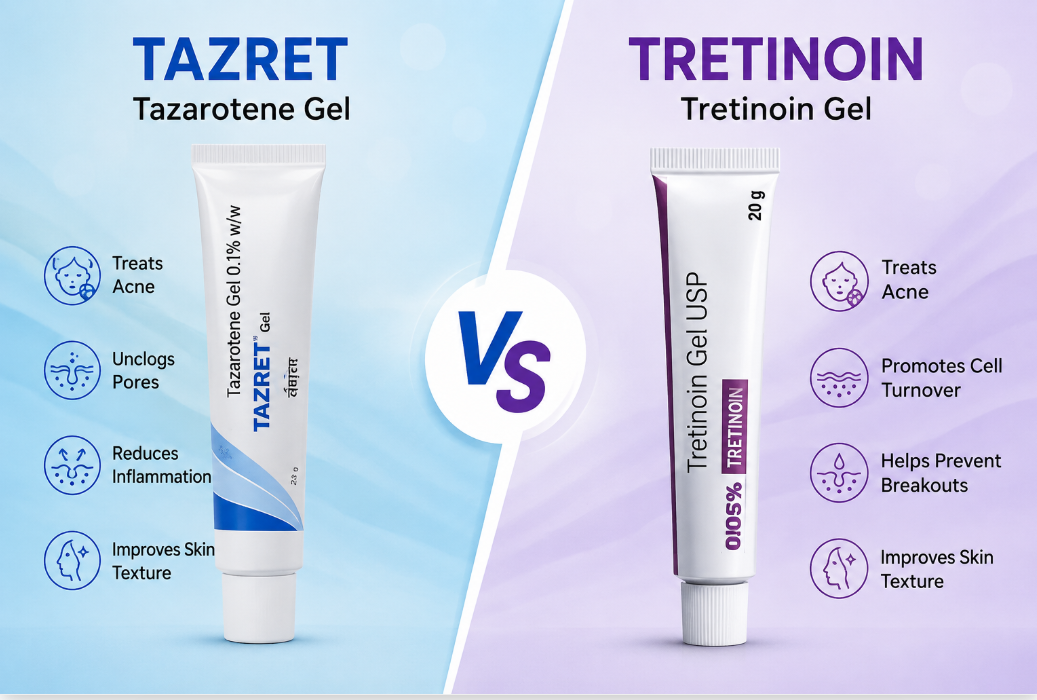
If you’ve been researching prescription retinoids for acne, psoriasis, or anti-ageing, you’ve likely come across two names that keep showing up side by side: Tazret Gel and Tretinoin. Both are topical retinoids — derivatives of vitamin A that work by speeding up skin cell turnover and calming inflammation — but they are not interchangeable. They differ in strength, approved uses, speed of results, and how harshly they treat your skin along the way.
This guide breaks down everything you need to know about Tazret (tazarotene) and tretinoin, so you can have a more informed conversation with your dermatologist about which one is right for you.
What Is Tazret?
Tazret is a brand name for tazarotene, marketed in India by Glenmark Pharmaceuticals. It’s available as a gel or cream in two main strengths — 0.05% and 0.1% (the latter often sold as Tazret Forte) — and is applied once daily, usually at night.
Tazarotene belongs to the third generation of retinoids, meaning it’s a newer, more selective molecule than older retinoids like tretinoin. It binds more precisely to retinoic acid receptors in the skin, which is part of why it tends to act faster and more forcefully.
Tazret is primarily prescribed for:
- Plaque psoriasis — reducing the redness, scaling, and thickness of psoriatic patches
- Acne vulgaris — clearing existing breakouts and preventing new ones
- Photodamage and fine wrinkles (off-label, cosmetic use)
- Mottled hyperpigmentation from sun exposure
Notably, tazarotene has FDA approval specifically for psoriasis — a distinction tretinoin does not share.
What Is Tretinoin?
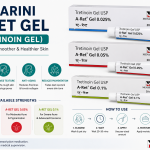
Tretinoin, sold under brand names like Retin-A, Avita, Renova, and A-Ret gel, was the first topical retinoid ever developed and has been used in dermatology for decades. It’s a first-generation retinoid, and its long track record means there’s an enormous body of research behind its safety and efficacy.
Tretinoin comes in a wider range of strengths, generally between 0.014% and 0.1%, and is also applied once daily in the evening, since it degrades in sunlight and increases photosensitivity.
Tretinoin is commonly used for:
- Acne vulgaris — its original and most well-established FDA-approved use
- Fine lines and wrinkles — FDA-approved for cosmetic anti-ageing use
- Hyperpigmentation and uneven skin tone
- Psoriasis (off-label; not FDA-approved for this use, unlike tazarotene)
Tazret vs Tretinoin: Head-to-Head Comparison
| Feature | Tazret (Tazarotene) | Tretinoin |
|---|---|---|
| Generation | Third-generation retinoid | First-generation retinoid |
| Potency | Stronger, more potent | Comparatively gentler |
| FDA-approved for psoriasis | Yes | No (off-label only) |
| FDA-approved for wrinkles | Yes | Yes |
| Speed of results | Generally faster | Slower, gradual |
| Irritation risk | Higher, especially at 0.1% | Lower, but still present |
| History of use | Approved 1997, shorter track record | Decades of research and use |
| Application | Once daily at night | Once daily at night |
| Common strengths | 0.05%, 0.1% | 0.014%–0.1% (varies by brand) |
| Light sensitivity | Somewhat less light-sensitive | More prone to breaking down in light |
Key Differences Explained
1. Potency and Speed
The most consistent finding across clinical comparisons is that tazarotene is the stronger of the two. It tends to produce visible improvement faster, particularly for sun damage, mottled pigmentation, and coarse wrinkling. Some research has found tazarotene outperforms tretinoin specifically in photodamage repair. For acne, however, the two are generally considered comparably effective, with tazarotene sometimes preferred for more stubborn or severe cases that haven’t responded well to milder treatments.
2. Approved Uses
This is one of the clearest points of separation. Tazarotene gel carries FDA approval for plaque psoriasis, making it a first-line topical retinoid option for that condition. Tretinoin is sometimes used off-label for psoriasis, but it lacks the same regulatory backing for that indication. On the flip side, both drugs share approval for acne and the cosmetic treatment of fine wrinkles.
3. Side Effect Profile
Both medications cause a similar cluster of side effects during the adjustment period — this is often called “retinization” or the “purge” phase. Expect:
- Redness and irritation
- Dryness and flaking or peeling
- Itching or a burning sensation
- Temporary worsening of acne before it improves
- Increased sensitivity to sunlight
The difference is one of degree. Tazarotene, particularly at the 0.1% strength, is more likely to cause pronounced irritation, especially in the first few weeks of use. Tretinoin’s side effects tend to be milder and more gradual, which is part of why it’s often the starting point for people new to retinoids or those with sensitive skin.
4. Who Might Prefer Which
- Choose (or be prescribed) Tazret if: you have psoriasis, you’ve already tried tretinoin without adequate results, you have more resilient skin that tolerates actives well, or your dermatologist wants faster results for photodamage.
- Choose tretinoin if: you’re new to retinoids, you have sensitive or reactive skin, you want a treatment with a long-established safety record, or your main concern is acne or general anti-ageing without psoriasis involved.
Ultimately, this decision belongs to a dermatologist who can assess your skin type, medical history, and treatment goals — not something to decide purely by comparing ingredient lists.
Benefits of Tazret Gel
- Fast-acting relief for plaque psoriasis symptoms, including scaling and thickness
- Effective against both inflammatory and non-inflammatory acne lesions
- Strong performance against photodamage, fine wrinkling, and mottled pigmentation
- A once-daily regimen that’s simple to incorporate into a routine
- Available in multiple strengths and formulations (gel, cream) to suit different skin needs
Benefits of Tretinoin
- Decades of clinical research supporting both safety and efficacy
- Effective for acne, with well-documented long-term outcomes
- FDA-approved for treating fine lines and wrinkles
- Generally better tolerated by beginners and sensitive skin types
- Widely available across many brand names and formulations, offering flexibility in strength and cost
Side Effects: What to Expect
Common to Both
- Skin dryness and peeling
- Redness or irritation
- Itching
- Burning or stinging sensation on application
- Increased photosensitivity (sunburn risk)
- Initial “purging” — a temporary flare-up of acne as skin cell turnover accelerates
More Associated with Tazret (due to higher potency)
- More pronounced burning and stinging, especially with the 0.1% strength
- Higher likelihood of noticeable peeling in the first few weeks
- Individuals with deeper skin tones may be more prone to irritation-related pigment changes
Rare but Serious Side Effects (Both Drugs)
- Allergic reactions (swelling, severe rash, blistering)
- Severe skin irritation requiring discontinuation
Both tazarotene and tretinoin are classified as teratogenic, meaning they can cause serious harm to a developing fetus. Neither should be used during pregnancy, and effective contraception is generally recommended for anyone of childbearing potential who is using either medication. Breastfeeding individuals should also consult their doctor, as safety data during lactation is limited for both drugs.
How to Use Either Retinoid Safely
Regardless of which one your dermatologist recommends, a few practices apply universally:
- Apply at night to a clean, fully dry face — moisture can increase irritation and reduce effectiveness.
- Use a pea-sized amount for the whole face; more product does not mean faster results, only more irritation.
- Start slowly — every other night or even twice a week initially, building up tolerance over several weeks.
- Moisturize consistently, and consider the “sandwich method” (moisturizer, then retinoid, then moisturizer again) if your skin is reactive.
- Wear sunscreen every single morning, rain or shine, since both medications significantly increase sun sensitivity.
- Avoid combining with other harsh actives — like benzoyl peroxide, exfoliating acids, or physical scrubs — at least initially, to prevent compounding irritation.
- Give it time. Visible improvement for acne or psoriasis can take anywhere from 4 to 12 weeks, and anti-ageing benefits often take even longer to appear.
Frequently Asked Questions
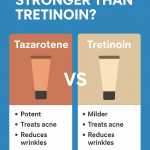
Is Tazret stronger than tretinoin? Yes. Tazarotene is generally considered more potent than tretinoin, which is why it may work faster but also tends to cause more noticeable irritation.
Can I switch from tretinoin to Tazret, or vice versa? Switching between retinoids is common in dermatology, but it should be guided by a professional, particularly because of differences in potency and how your skin has adjusted to the current product.
Which one is better for psoriasis? Tazarotene (Tazret) is specifically FDA-approved for plaque psoriasis, making it the more established choice for that condition, though tretinoin is sometimes used off-label.
Which one is better for acne? Both are effective for acne, and studies generally show comparable results, though tazarotene may work somewhat faster for more severe cases.
Do both cause purging? Yes, an initial breakout or increased irritation is common with both medications as skin cell turnover accelerates. This typically settles within a few weeks.
Can I use these over the counter? No. Both tazarotene and tretinoin are prescription-only medications in most countries, including India, and should only be used under medical supervision.
The Bottom Line
Tazret (tazarotene) and tretinoin are both effective, well-studied topical retinoids that share a similar mechanism but differ meaningfully in strength, approved uses, and tolerability. Tazret .05% Gel tends to work faster and is specifically approved for psoriasis, but it carries a higher risk of irritation. Tretinoin has a longer safety record, tends to be gentler, and remains a reliable first choice for acne and anti-ageing for many patients.
Neither medication is objectively “better” — the right choice depends on your specific skin condition, sensitivity, and treatment goals. Because both are prescription medications with real side effects and contraindications (including pregnancy), the safest path forward is a conversation with a dermatologist who can tailor the choice, strength, and application schedule to your skin.
This article is for general informational purposes only and is not a substitute for professional medical advice. Always consult a qualified healthcare provider before starting, stopping, or switching any prescription skincare treatment.