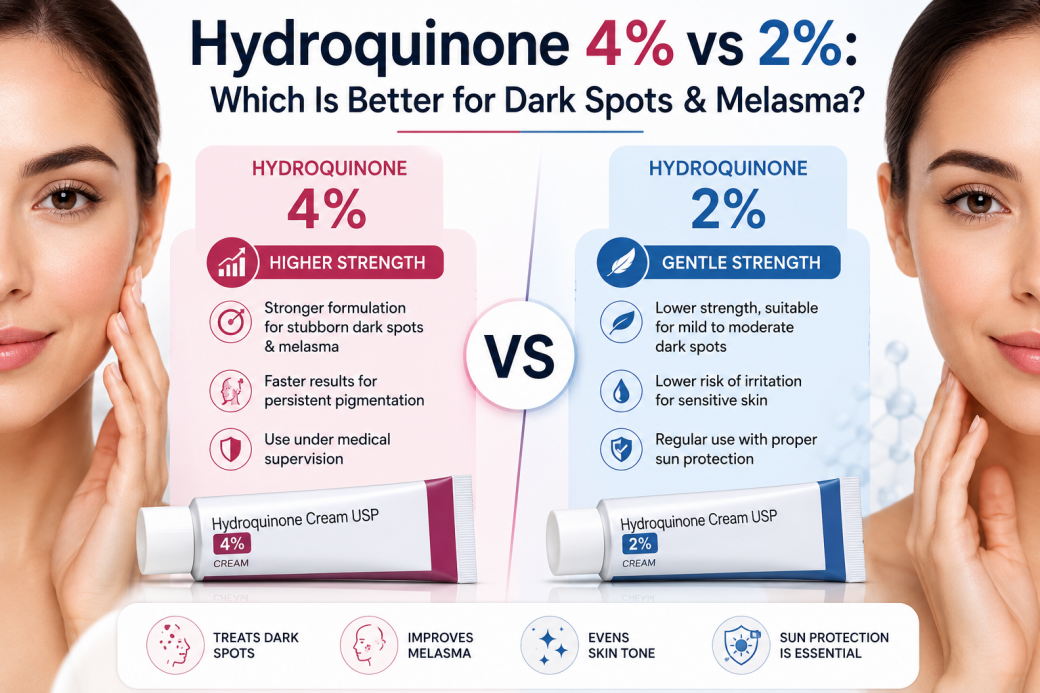
Hyperpigmentation can appear as dark spots, uneven skin tone, acne marks, or patches associated with melasma. Hydroquinone is a well-known topical ingredient used to reduce excess pigmentation, but choosing between hydroquinone 4% vs 2% can be confusing.
The main difference is concentration: hydroquinone 4% contains twice as much hydroquinone as a 2% formulation. However, a higher concentration does not automatically mean better results for everyone.
This guide explains how hydroquinone 4% compares with 2%, including their potential uses, effectiveness, side effects, safety considerations, and factors to consider when choosing a strength.
What Is Hydroquinone?
Hydroquinone is a topical depigmenting agent that helps reduce melanin production, the pigment responsible for skin colour. By decreasing excess melanin production, hydroquinone can gradually make areas of hyperpigmentation less noticeable.
It has been used in the management of conditions such as:
- Melasma
- Post-inflammatory hyperpigmentation
- Dark spots
- Uneven pigmentation
- Certain other localised pigmentation problems
Hydroquinone is not intended to bleach normal skin. Its purpose is to reduce excess pigmentation and help affected areas become more similar in colour to the surrounding skin.
The American Academy of Dermatology (AAD) includes hydroquinone among treatments that dermatologists may use for melasma. Treatment plans may also include sunscreen and other topical medications.
Hydroquinone 4% vs 2%: What Is the Difference?
The simplest difference is the concentration.
Hydroquinone 2% contains 2% hydroquinone, while hydroquinone 4% contains 4% hydroquinone.
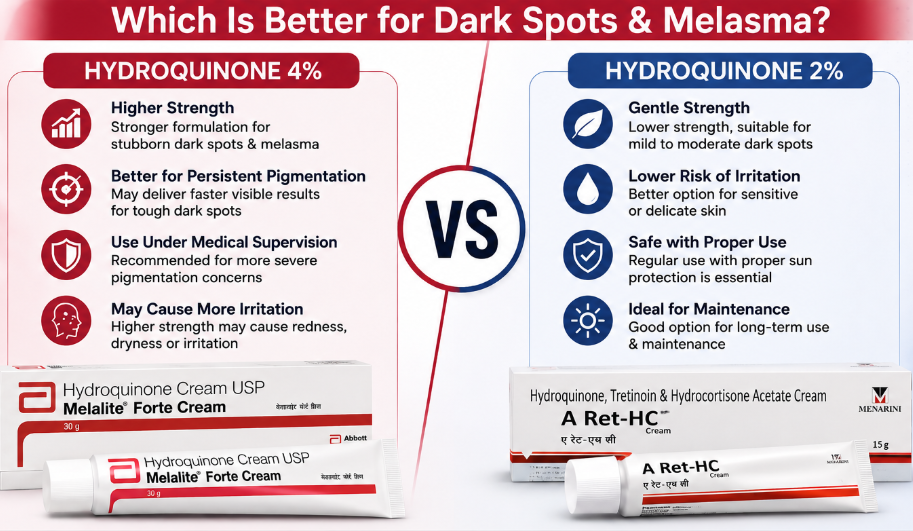
Because 4% has twice the concentration, it is generally considered the stronger formulation. However, strength alone does not determine treatment success.
| Feature | Hydroquinone 4% | Hydroquinone 2% |
|---|---|---|
| Hydroquinone concentration | 4% | 2% |
| Relative strength | Higher | Lower |
| Potential use | More persistent or significant pigmentation under professional guidance | Certain milder pigmentation concerns |
| Irritation potential | May be higher | May be lower, but irritation is still possible |
| Suitable for sensitive skin | Requires particular caution | May be considered when a lower strength is appropriate |
| Sun protection | Essential | Essential |
| Medical guidance | Recommended | Recommended |
Is Hydroquinone 4% Better Than 2%?
Not necessarily.
Hydroquinone 4% is stronger, but that does not mean it is automatically the best choice for every person.
A healthcare professional may consider several factors before recommending a concentration, including:
- The type of pigmentation
- Severity of the pigmentation
- Skin sensitivity
- Previous treatments
- History of irritation
- Skin tone
- Other medications or skincare products being used
- The desired treatment approach
For some people, a lower concentration may be more appropriate because minimising irritation is an important part of managing hyperpigmentation.
Hydroquinone 4%: Potential Benefits
Hydroquinone 4% is a higher-strength formulation that may be prescribed for certain pigmentation disorders.
It may be considered as part of a treatment plan for:
Melasma
Melasma causes brown, gray-brown, or darker patches, commonly on the face. Hydroquinone has traditionally been used as one component of melasma treatment.
Persistent Hyperpigmentation
Some pigmentation can remain for a long time after inflammation or skin injury. A dermatologist may consider a stronger hydroquinone formulation depending on the individual situation.
Post-Inflammatory Hyperpigmentation
Dark marks can develop after acne, irritation, or other inflammation. Hydroquinone may be considered when appropriate for the particular type of pigmentation.
However, stronger treatment should not be interpreted as a guarantee of faster or better results.
Hydroquinone 2%: Potential Benefits
Hydroquinone 2% provides a lower concentration of the same active ingredient.
It may be considered in situations where a lower-strength formulation is appropriate, particularly when the treatment goal is to address certain milder areas of hyperpigmentation.
A lower concentration may also be considered when minimising irritation is an important concern.
However, hydroquinone 2% can still cause skin irritation, so it should not be assumed to be completely risk-free.
Does Hydroquinone 4% Work Faster Than 2%?
A common question is whether using 4% hydroquinone will automatically produce faster results.
Not necessarily.
Although 4% contains twice the concentration of hydroquinone, individual treatment response varies. Pigmentation can be affected by its underlying cause, depth, sun exposure, skin sensitivity, and consistency of treatment.
Using a stronger formulation or applying it more frequently than recommended can increase irritation without necessarily producing better results.
The goal should be effective pigmentation control with the lowest appropriate risk of irritation, rather than simply choosing the highest concentration.
Hydroquinone 4% vs 2% for Melasma
Melasma can be difficult to manage because it may return after treatment, particularly with continued exposure to sunlight and visible light.
Hydroquinone can be included in a dermatologist-directed treatment plan. Depending on the individual’s condition, a healthcare professional may recommend a particular concentration or combine hydroquinone with other treatments.
For example, prescription triple-combination therapy has historically combined hydroquinone with tretinoin and a corticosteroid for short-term treatment of moderate-to-severe facial melasma.
However, combination products should only be used according to professional directions because each ingredient has its own potential risks.
Which Strength Should You Choose for Melasma?
There is no universal answer.
Hydroquinone 4% may be selected when a stronger treatment is appropriate.
Hydroquinone 2% may be considered when a lower concentration is preferred.
The correct choice depends on the individual’s diagnosis, skin characteristics, previous treatment response, and medical advice.
Hydroquinone 4% vs 2% for Dark Spots
Dark spots can have different causes, including acne, inflammation, sun exposure, hormonal changes, and certain skin conditions.
Before choosing hydroquinone, it is important to understand why the pigmentation developed.
For example, if new acne continues to cause inflammation, treating only the existing dark marks may not prevent new pigmentation from developing.
Similarly, continued sun exposure can make pigmentation more difficult to manage.
For these reasons, hydroquinone treatment is generally most effective when combined with appropriate skincare and consistent sun protection.
Which Hydroquinone Strength Is Better for Sensitive Skin?
If you have sensitive skin, a stronger concentration may increase the likelihood of irritation.
Hydroquinone can cause:
- Redness
- Dryness
- Burning
- Stinging
- Peeling
- Itching
- Irritation
However, skin sensitivity varies from person to person. Even 2% hydroquinone can cause a reaction.
If your skin becomes significantly irritated, speak with a healthcare professional rather than simply reducing or increasing the amount on your own.
Can Hydroquinone Make Dark Spots Worse?
Hydroquinone is intended to reduce excess pigmentation, but irritation from topical products can sometimes trigger inflammation. In people who are prone to post-inflammatory hyperpigmentation, inflammation may contribute to additional darkening.
This is why more is not always better.
Applying excessive amounts, using hydroquinone too frequently, or combining it with multiple irritating skincare ingredients can increase the risk of irritation.
If pigmentation becomes noticeably darker, unusual, or develops a blue-black or grey appearance, discontinue self-treatment and seek medical advice.
Hydroquinone and Sun Protection
Sun protection is one of the most important parts of any hyperpigmentation treatment plan.
Ultraviolet radiation stimulates melanin production and can make dark spots and melasma more difficult to control.
When treating pigmentation, consider:
- Using broad-spectrum SPF 30 or higher
- Reapplying sunscreen as directed
- Wearing a hat or protective clothing when outdoors
- Seeking shade when possible
- Limiting prolonged direct sun exposure
For melasma, visible light may also contribute to pigmentation. Tinted sunscreens containing iron oxides can provide additional protection against visible light.
How Long Does Hydroquinone Take to Work?
Hydroquinone does not normally produce an overnight change.
The time required to see improvement depends on the underlying pigmentation and individual response.
Some people may notice gradual improvement after several weeks, while more persistent pigmentation may require several months of treatment.
Melasma can be particularly challenging and may require a longer-term management strategy.
If there is no improvement or the condition is worsening, consult a dermatologist rather than automatically switching to a stronger concentration.
Can You Use Hydroquinone 4% and 2% Together?
It is generally not advisable to combine different hydroquinone strengths unless specifically instructed by a healthcare professional.
Using 2% and 4% together does not necessarily provide better results. It could instead increase exposure and the possibility of irritation.
If your current treatment is not providing the expected improvement, ask your dermatologist whether the concentration, treatment duration, diagnosis, or overall regimen needs to be changed.
Can You Use Hydroquinone Every Day?
The appropriate frequency depends on the specific product and treatment plan.
Do not assume that applying hydroquinone more frequently will produce faster results. Follow the directions provided by your healthcare professional or the product labeling.
If you experience persistent redness, burning, peeling, or discomfort, seek professional advice.
Hydroquinone 4% vs 2%: Side Effects
Both concentrations can cause side effects.
Common topical reactions may include:
- Dryness
- Redness
- Mild burning
- Stinging
- Itching
- Peeling
- Irritation
A rare but important concern associated with prolonged or inappropriate hydroquinone use is exogenous ochronosis, which can cause persistent blue-black or grey-brown discolouration of the skin.
This is one reason hydroquinone should be used appropriately and monitored when necessary.
Important Precautions
Before using hydroquinone, consider speaking with a healthcare professional if:
- You have very sensitive skin.
- You have an uncertain diagnosis.
- You are pregnant or breastfeeding.
- You have an existing skin condition.
- You are already using prescription acne or pigmentation treatments.
- You regularly use exfoliating acids or retinoids.
- You have previously experienced a reaction to hydroquinone.
Avoid applying hydroquinone to broken, irritated, or damaged skin unless specifically instructed by a healthcare professional.
Related Products
- Hydroquinone 4% Cream – For targeted treatment of hyperpigmentation and dark spots.
- Hydroquinone 2% Cream – Lower-strength hydroquinone option for pigmentation concerns.
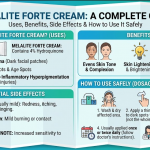
- Melalite Forte Cream 4% – Hydroquinone 4% cream commonly used for hyperpigmentation.
- Melalite XL Cream – Hydroquinone 2% -based pigmentation treatment.
- Melamet Cream – Hydroquinone 2% cream for dark spots and uneven skin tone.
- Triluma Cream – Triple-combination cream containing hydroquinone 4%, tretinoin, and fluocinolone; generally used under medical supervision.
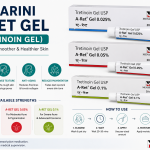
- A Ret-HC Cream – Combination treatment containing tretinoin and hydroquinone 2% for certain pigmentation concerns.
Hydroquinone 4% vs 2%: Frequently Asked Questions
Is hydroquinone 4% twice as strong as 2%?
Yes, in terms of concentration, 4% contains twice as much hydroquinone as 2%. However, this does not mean it will provide twice the results.
Is hydroquinone 4% better for dark spots?
It can be an appropriate option for some pigmentation concerns, but stronger does not automatically mean better. The right concentration depends on the individual and the cause of the pigmentation.
Is hydroquinone 2% effective for hyperpigmentation?
It may help with certain types of hyperpigmentation. A healthcare professional can determine whether hydroquinone is appropriate for your particular condition.
Which is better for melasma: hydroquinone 4% or 2%?
Both may have a role in pigmentation treatment, but the appropriate concentration depends on melasma severity, skin sensitivity, previous treatment, and the overall treatment plan.
Does hydroquinone 4% work faster?
Not necessarily. A higher concentration does not guarantee faster results.
Can I switch from hydroquinone 2% to 4%?
Do not increase the concentration on your own. If 2% is not producing the expected results, discuss your options with a dermatologist.
Can hydroquinone remove acne scars?
Hydroquinone may help reduce the appearance of the dark pigmentation left after acne, but it does not remove indented or raised acne scars.
Do I need sunscreen while using hydroquinone?
Yes. Consistent sun protection is extremely important when treating hyperpigmentation.
Hydroquinone 4% vs 2%: Final Verdict
When comparing hydroquinone 4% vs 2%, the most obvious difference is concentration. Hydroquinone 4% is the stronger formulation, while 2% provides a lower concentration.
However, stronger does not automatically mean better.
Hydroquinone 4% may be appropriate for certain persistent pigmentation problems when recommended by a healthcare professional, while 2% may be suitable when a lower-strength approach is preferred.
The best results usually come from identifying the cause of pigmentation, using the appropriate treatment consistently, avoiding unnecessary irritation, and protecting the skin from sunlight.
If you are unsure whether hydroquinone 4% or 2% is appropriate for your skin, consult a dermatologist or qualified healthcare professional before starting treatment or changing concentration.