Skin discolouration, such as melasma, dark spots, acne scars, and hyperpigmentation, can undermine confidence and make achieving an even complexion challenging. Fortunately, prescription treatments like Melalite Forte Cream can help reduce unwanted pigmentation when used correctly.
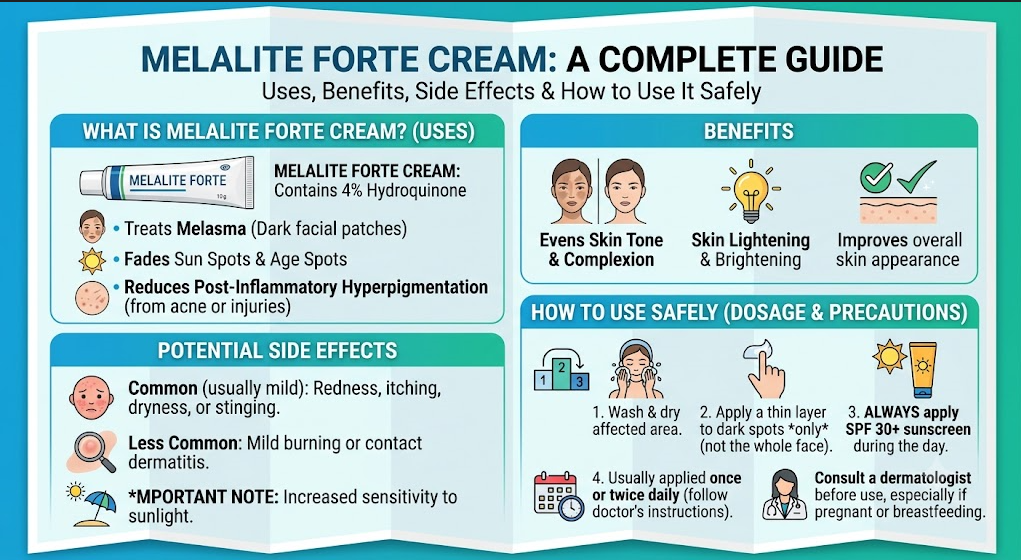
Melalite Forte Cream contains Hydroquinone 4%, a dermatologist-recommended depigmenting agent that helps lighten dark patches by reducing melanin production in the skin. It is commonly prescribed for conditions such as melasma, post-inflammatory hyperpigmentation, freckles, and age spots.
This guide explains everything you need to know about Melalite Forte Cream, including its uses, benefits, potential side effects, and how to use it safely for optimal results.
What Is Melalite Forte Cream?
Melalite Forte Cream is a prescription topical medication containing Hydroquinone 4%, one of the most effective ingredients for treating hyperpigmentation.
Hydroquinone works by inhibiting the enzyme tyrosinase, which plays a key role in melanin production. By slowing melanin synthesis, Melalite Forte gradually fades dark patches and helps restore a more even skin tone.
It should only be used under the supervision of a healthcare professional, as improper or prolonged use may increase the risk of skin irritation and other side effects.
What Is Melalite Forte Cream Used For?
Dermatologists commonly prescribe Melalite Forte Cream for:
1. Melasma
Melasma causes brown or grey patches on the face, often triggered by hormonal changes, pregnancy, or sun exposure. Hydroquinone is considered one of the standard topical treatments for reducing melasma.
2. Hyperpigmentation
Excess melanin production can lead to uneven skin tone. Melalite Forte helps fade these areas gradually.
3. Acne Marks
After acne heals, dark spots may remain. Regular use of Melalite Forte can help reduce post-inflammatory pigmentation over time.
4. Sunspots
Long-term sun exposure may cause age spots or solar lentigines. Hydroquinone helps lighten these pigmented areas when combined with daily sun protection.
5. Freckles
Some freckles may lighten with consistent treatment, although results vary depending on skin type and the depth of pigmentation.
How Does Melalite Forte Cream Work?
Melalite Forte contains Hydroquinone, which works by:
- Blocking melanin production
- Reducing pigmentation in affected skin
- Preventing new pigment formation
- Promoting a more even complexion
Unlike skin bleaching products marketed for cosmetic purposes, Melalite Forte is intended to treat medically recognised pigmentation disorders.
Benefits of Melalite Forte Cream
When used correctly, Melalite Forte offers several benefits:
Reduces Melasma
One of the most effective topical treatments for melasma.
Fades Acne Scars
Helps reduce dark marks left by acne.
Improves Skin Tone
Creates a more even complexion by reducing areas of excess pigmentation.
Treats Sun Damage
Can lighten sun-induced pigmentation when combined with proper sun protection.
Clinically Proven Ingredient
Hydroquinone has been used in dermatology for decades and remains a widely prescribed depigmenting agent for suitable patients.
How to Use Melalite Forte Cream Safely
Proper application is essential for effectiveness and minimizing side effects.
Step 1: Wash Your Face
Cleanse the affected area using a gentle cleanser and pat dry.
Step 2: Perform a Patch Test
Before regular use, apply a small amount to a discreet area of skin. Wait 24 hours to check for irritation.
Step 3: Apply a Thin Layer
Use only a small amount and apply it directly to the pigmented areas.
Avoid applying to healthy surrounding skin whenever possible.
Step 4: Wash Your Hands
Wash your hands after application unless your hands are the treatment area.
Step 5: Use Sunscreen Daily
Hydroquinone makes the skin more sensitive to sunlight.
Use a broad-spectrum sunscreen with SPF 30 or higher every morning and reapply as needed.
How Often Should You Apply
Melalite Forte Cream?
Most dermatologists recommend applying Melalite Forte:
- Once daily
- Usually at night
Always follow your healthcare provider’s instructions, as individual treatment plans may vary.
How Long Does
Melalite Take to Work?
Results differ from person to person.
Many users notice improvement within:
- 4–8 weeks
More stubborn pigmentation may require:
- 2–3 months of treatment
Avoid using the cream longer than recommended without medical supervision.
Possible Side Effects of Melalite Forte Cream
Like all medications, Melalite Forte may cause side effects.
Common side effects include:
- Mild redness
- Burning sensation
- Dryness
- Peeling
- Itching
- Temporary irritation
These symptoms are often mild and improve as your skin adjusts.
Serious Side Effects of Melalite
Although uncommon, prolonged or inappropriate use may increase the risk of:
- Severe irritation
- Allergic reactions
- Skin blistering
- Blue-black skin discoloration (exogenous ochronosis)
Stop using the cream and contact your healthcare provider if severe reactions occur.
Who Should Not Use Melalite Forte?
Melalite Forte may not be suitable for everyone.
Avoid using it if you:
- Are allergic to Hydroquinone or any ingredient in the cream
- Have broken or infected skin
- Have severe eczema at the application site
- Are pregnant or breastfeeding unless advised by your healthcare provider
Always inform your doctor about any skin conditions or medications you are using.
Tips for Best Results of
Melalite Forte Cream
To improve treatment outcomes:
- Apply only to affected areas.
- Use sunscreen every day.
- Wear protective clothing when outdoors.
- Avoid excessive sun exposure.
- Do not combine with harsh exfoliants unless advised.
- Be patient and use the medication consistently.
Common Mistakes to Avoid
Using Too Much
Applying more cream will not speed up results and may increase irritation.
Skipping Sunscreen
Sun exposure can worsen pigmentation and reduce treatment effectiveness.
Using It for Too Long
Hydroquinone is generally intended for limited treatment courses. Long-term use should be supervised by a healthcare professional.
Applying to Healthy Skin
Treat only the areas with pigmentation.
Can Melalite Forte Be Used with Other Skincare Products?
Yes, but caution is needed.
Products containing strong acids, retinoids, benzoyl peroxide, or physical exfoliants may increase irritation when used together.
Consult your dermatologist before combining treatments.
Frequently Asked Questions
1. What is Melalite Forte Cream used for?
Melalite Forte Cream is primarily used to treat melasma, hyperpigmentation, dark spots, acne marks, freckles, and age spots. It contains Hydroquinone 4%, which helps reduce excess melanin production and gradually lightens pigmented skin.
2. How does Melalite Forte Cream work?
Melalite Forte Cream contains Hydroquinone 4%, which blocks the enzyme responsible for producing melanin (tyrosinase). By reducing melanin production, it gradually fades dark patches and promotes a more even skin tone.
3. How long does Melalite Forte Cream take to show results?
Most people notice visible improvement within 4 to 8 weeks of consistent use. Deeper pigmentation or melasma may require up to 2 to 3 months, depending on the condition and your dermatologist’s recommendations.
4. Can Melalite Forte Cream remove melasma permanently?
Melalite Forte Cream can significantly reduce melasma, but it may not permanently eliminate it. Melasma can return due to sun exposure, hormonal changes, or pregnancy. Daily sunscreen use helps maintain results.
5. Can Melalite Forte Cream remove acne scars?
Melalite Forte Cream helps fade dark acne marks (post-inflammatory hyperpigmentation) but does not treat pitted or raised acne scars. It works best on discoloration left behind after acne heals.
6. How should I apply Melalite Forte Cream?
Wash and dry the affected area, then apply a thin layer of Melalite Forte Cream to the pigmented skin once daily or as directed by your healthcare provider. Avoid contact with the eyes, mouth, and broken skin.
7. Should I use sunscreen while using Melalite Forte Cream?
Yes. Daily use of a broad-spectrum sunscreen (SPF 30 or higher) is essential because Hydroquinone increases the skin’s sensitivity to sunlight. Sun protection also helps prevent pigmentation from returning.
8. Can I use Melalite Forte Cream every day?
Yes, most people use Melalite Forte Cream once daily, usually at night. However, you should always follow your healthcare provider’s instructions and avoid prolonged use without medical supervision.
9. What are the common side effects of Melalite Forte Cream?
Common side effects include mild redness, dryness, burning, peeling, itching, and skin irritation. These effects are usually temporary and improve as your skin adjusts to treatment.
10. Who should not use Melalite Forte Cream?
Melalite Forte Cream should not be used by people who are allergic to Hydroquinone, have broken or infected skin, or have been advised against its use by a healthcare professional. Pregnant or breastfeeding women should consult their doctor before using it.
11. Can Melalite Forte Cream be used with other skincare products?
Yes, but avoid combining it with strong exfoliants, retinoids, benzoyl peroxide, or products containing high concentrations of acids unless recommended by your dermatologist, as this may increase skin irritation.
12. Can men use Melalite Forte Cream?
Yes. Melalite Forte Cream is suitable for both men and women who have melasma, hyperpigmentation, sunspots, or other pigmentation disorders when prescribed by a healthcare professional.
13. What should I avoid while using Melalite Forte Cream?
Avoid excessive sun exposure, tanning beds, harsh scrubs, chemical peels, and waxing on treated skin. Do not apply the cream to healthy skin, open wounds, or irritated areas.
14. Is Melalite Forte Cream safe for long-term use?
Melalite Forte Cream is generally recommended for short-term use under medical supervision. Prolonged or inappropriate use may increase the risk of skin irritation or rare conditions such as exogenous ochronosis.
15. Can I buy Melalite Forte Cream online?
Yes, Melalite Forte Cream can be purchased from licensed online pharmacies where it is legally available. Always ensure you buy melalite cream from a reputable source that supplies genuine medication and follow local prescription requirements.
Does Melalite Forte permanently remove pigmentation?
No. Results can be maintained with proper sun protection, but pigmentation may return if the underlying cause persists.
Can I use makeup while using Melalite Forte?
Yes. Allow the cream to absorb completely before applying cosmetics.
Can Melalite Forte treat acne?
It does not treat active acne but can help fade dark marks left behind after acne heals.
Can men use Melalite Forte Cream?
Yes. It can be prescribed for both men and women with suitable pigmentation disorders.
Safety Precautions
While using Melalite Forte:
- Avoid tanning beds.
- Do not wax treated areas if irritation is present.
- Keep the cream away from your eyes, lips, and inside the nose.
- Store it at room temperature away from direct sunlight.
- Keep out of reach of children.
Final Thoughts
Melalite Forte Cream is a well-established prescription treatment for melasma, hyperpigmentation, sunspots, freckles, and post-acne dark marks. Its active ingredient, Hydroquinone 4%, works by reducing melanin production, helping improve skin tone over time.
For the best results, use Melalite Forte cream exactly as directed, protect your skin from UV exposure with daily sunscreen, and avoid prolonged or unsupervised use. Because everyone’s skin responds differently, regular follow-up with your healthcare provider or dermatologist is the safest way to monitor progress and determine the appropriate duration of treatment.
With consistent use and proper skin care, many people achieve a clearer, more even complexion while minimising the risk of unwanted side effects.