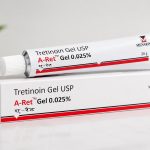
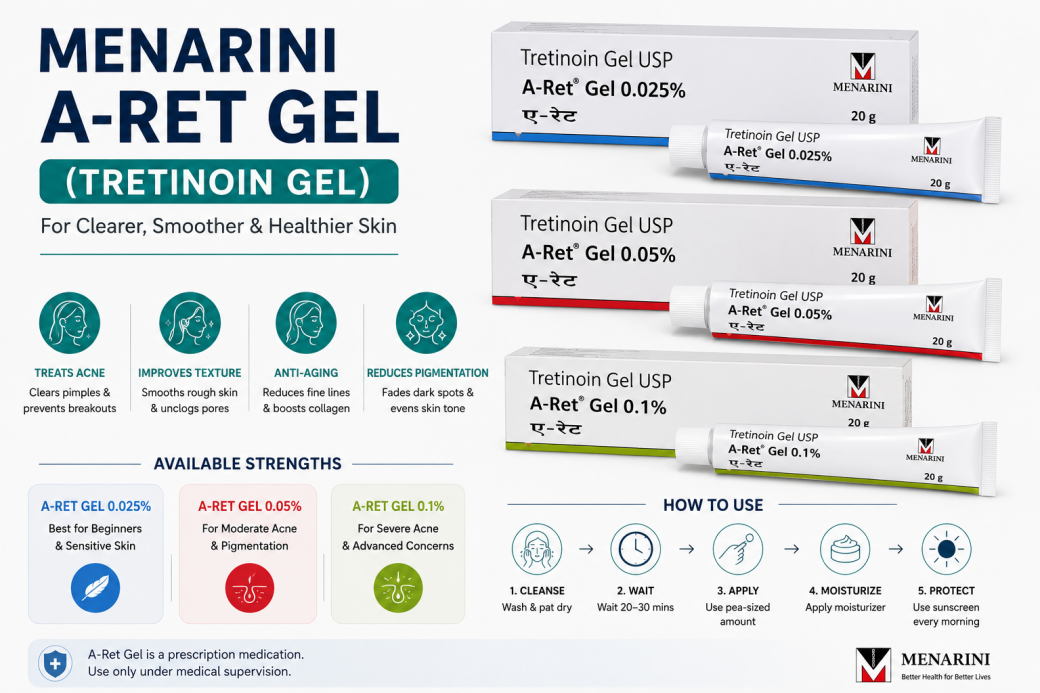
If you’ve searched for an effective prescription treatment for acne, acne scars, wrinkles, or uneven skin tone, you’ve probably come across A-Ret Gel, a topical tretinoin gel manufactured by Menarini India. Dermatologists worldwide recommend tretinoin because it is one of the most thoroughly researched topical retinoids available.
A-Ret Gel helps clear clogged pores, reduce acne breakouts, improve skin texture, stimulate collagen production, and fade post-acne marks over time. However, because tretinoin is a potent medication, choosing the correct strength and using it properly are essential for achieving the best results while minimising irritation.
In this guide, you’ll learn everything you need to know about Menarini A-Ret Gel, including its available strengths, uses, benefits, side effects, precautions, and expert tips for safe and effective treatment.
What Is Menarini A-Ret Gel?
A-Ret Gel is a prescription topical medication that contains tretinoin, a derivative of vitamin A. It belongs to a class of medications known as topical retinoids.
Tretinoin works by accelerating skin cell turnover, preventing clogged pores, and promoting the growth of healthier skin cells. Over time, it also stimulates collagen production, helping improve fine lines, wrinkles, acne scars, and uneven pigmentation.
Dermatologists prescribe A-Ret Gel to treat:
- Mild to severe acne
- Blackheads and whiteheads
- Post-acne pigmentation
- Rough skin texture
- Fine lines and wrinkles
- Sun-damaged skin
- Enlarged pores
Because of its proven effectiveness, tretinoin remains one of the gold-standard topical treatments in dermatology.
Active Ingredient
Generic Name: Tretinoin
Drug Class: Topical Retinoid
Available Form: Gel
Available Strengths of A-Ret Gel
Menarini manufactures A-Ret Gel in multiple strengths to suit different skin types and treatment goals.
A-Ret Gel 0.025%
This is the mildest strength and is generally recommended for:
- Beginners
- Sensitive skin
- Mild acne
- Early signs of ageing
- First-time retinoid users
Benefits include:
- Less irritation
- Gradual improvement
- Better tolerance
- Ideal introduction to tretinoin therapy
A-Ret Gel 0.05%
The medium-strength formulation is commonly prescribed for:
- Moderate acne
- Persistent blackheads
- Acne scars
- Hyperpigmentation
- Uneven skin tone
It offers faster results than the 0.025% gel while remaining tolerable for many users who have already adjusted to tretinoin.
A-Ret Gel 0.1%
This is the strongest concentration available.
Dermatologists may recommend it for:
- Severe acne
- Resistant acne
- Deep acne scars
- Significant sun damage
- Advanced photoaging
Because of its potency, beginners should generally avoid starting with this strength unless specifically directed by a healthcare professional.
How Does Tretinoin Work?
Tretinoin improves skin through several mechanisms.
1. Speeds Up Skin Cell Turnover
Old skin cells are shed more quickly, allowing healthier cells to reach the surface.
This process helps reduce:
- Acne
- Dull skin
- Rough texture
- Pigmentation
2. Prevents Clogged Pores
One of tretinoin’s primary actions is preventing dead skin cells from blocking hair follicles.
This significantly reduces:
- Whiteheads
- Blackheads
- Pimples
- Cystic acne formation
3. Reduces Inflammation
Regular use can calm acne-related inflammation and decrease the frequency of future breakouts.
4. Boosts Collagen Production
Collagen is responsible for keeping skin firm and youthful.
Tretinoin stimulates collagen synthesis, helping reduce:
- Fine lines
- Wrinkles
- Sagging
- Acne scars
5. Improves Skin Tone
Over time, tretinoin helps fade:
- Dark spots
- Sun spots
- Acne marks
- Uneven pigmentation
Uses of Menarini A-Ret Gel
1. Acne Treatment
The primary indication for A-Ret Gel is acne vulgaris.
It helps treat:
- Whiteheads
- Blackheads
- Papules
- Pustules
- Mild inflammatory acne
With regular use, many patients experience fewer breakouts and smoother skin.
2. Post-Acne Marks
Many acne sufferers are left with lingering dark spots after blemishes heal.
Tretinoin accelerates skin renewal, gradually reducing post-inflammatory hyperpigmentation and helping the complexion appear more even.
3. Fine Lines and Wrinkles
Tretinoin is one of the few topical ingredients backed by decades of clinical research for improving visible signs of skin ageing.
Benefits include:
- Softer fine lines
- Improved skin elasticity
- Smoother texture
- Firmer appearance
4. Sun-Damaged Skin
Long-term sun exposure can cause rough texture, discolouration, and premature ageing.
A-Ret Gel supports healthier skin renewal and can improve the appearance of photoaged skin when used consistently alongside daily sunscreen.
5. Uneven Skin Texture
Regular application helps refine the skin surface, making it appear smoother and more even.
Benefits of Menarini A-Ret Gel
When used consistently under medical guidance, A-Ret Gel offers numerous skin benefits.
Clears Acne
Tretinoin targets one of acne’s root causes—clogged pores—helping reduce both existing blemishes and future breakouts.
Reduces Blackheads and Whiteheads
By preventing pore blockages, the gel gradually minimises comedones and promotes clearer skin.
Improves Skin Texture
Many users notice smoother, softer skin after several weeks of consistent use.
Fades Acne Scars
Although deep scars may require additional treatments, tretinoin can improve the appearance of superficial acne scars by encouraging skin renewal.
Brightens the Complexion
By promoting fresh skin cell turnover, A-Ret Gel can help diminish dullness and reveal a more radiant complexion.
Minimises Fine Lines
Long-term use supports collagen production, making fine lines and early wrinkles less noticeable.
Helps Even Skin Tone
Gradual improvement in discolouration can lead to a more uniform skin tone over time.
Supports Long-Term Skin Health
Consistent tretinoin use, combined with proper sun protection and moisturization, can contribute to healthier-looking skin in the long run.
When Can You Expect Results?
Tretinoin requires patience. While some irritation or peeling may occur in the first few weeks, visible improvements usually develop gradually.
Typical timelines include:
- 2–4 weeks: Mild dryness, peeling, or an initial acne flare (“purging”) may occur.
- 6–8 weeks: Acne may begin to improve, and skin texture often feels smoother.
- 3–6 months: More noticeable reductions in acne, dark spots, and uneven tone.
- 6–12 months: Continued improvements in fine lines, collagen production, and overall skin appearance.
It’s important to continue using the medication as directed unless advised otherwise by your healthcare provider.
How to Choose the Right A-Ret Gel Strength
Selecting the correct strength of A-Ret Gel is one of the most important steps toward achieving clear, healthy-looking skin while minimising irritation. Although tretinoin is highly effective, starting with a concentration that matches your skin type and treatment goals can improve your experience.
A-Ret Gel 0.025%
This lower-strength formulation is ideal for:
- First-time tretinoin users
- Sensitive or dry skin
- Mild acne
- Early signs of ageing
- Individuals looking for gradual skin improvement
A-Ret Gel 0.05%
This medium-strength option is commonly recommended for:
- Moderate acne
- Persistent blackheads and whiteheads
- Acne scars
- Hyperpigmentation
- Users who have already adapted to 0.025% tretinoin
A-Ret Gel 0.1%
The highest strength is generally reserved for:
- Severe acne
- Resistant acne
- Significant sun damage
- Advanced photoaging
- Patients who tolerate lower strengths well
A dermatologist can help determine which concentration is most appropriate for your skin condition.
How to Apply A-Ret Gel Correctly
Using tretinoin properly is essential for reducing irritation and maximising results.
Step 1: Cleanse Your Face
Wash your face with a gentle, fragrance-free cleanser and pat it dry.
Step 2: Wait 20–30 Minutes
Allow your skin to dry completely before applying tretinoin. Applying it to damp skin may increase irritation.
Step 3: Apply a Pea-Sized Amount
A pea-sized amount is generally enough for the entire face. Dot the gel on the forehead, cheeks, chin, and nose, then spread it into a thin layer.
Step 4: Avoid Sensitive Areas
Do not apply near:
- Eyes
- Eyelids
- Lips
- Inside the nose
- Broken or irritated skin
Step 5: Moisturise
Apply a non-comedogenic moisturiser after tretinoin if dryness occurs. Some users benefit from the “sandwich method,” where moisturiser is applied before and after tretinoin.
Step 6: Wear Sunscreen Every Morning
Daily use of a broad-spectrum sunscreen with SPF 30 or higher is essential because tretinoin increases the skin’s sensitivity to sunlight.
Best Skincare Routine While Using A-Ret Gel
- Gentle cleanser
- Hydrating moisturizer
- Broad-spectrum sunscreen (SPF 30–50)
Morning Routine
Evening Routine
- Gentle cleanser
- Wait until the skin is dry
- Apply A-Ret Gel
- Moisturizer
Keeping the routine simple helps reduce irritation, especially during the first few weeks.
What Should You Avoid While Using Tretinoin?
To protect your skin and prevent excessive irritation, avoid using A-Ret Gel with strong exfoliating products unless directed by a healthcare professional.
Avoid combining tretinoin with:
- Harsh physical scrubs
- Alcohol-based toners
- High-strength glycolic acid
- Strong salicylic acid products
- Benzoyl peroxide at the same time of day (unless specifically instructed)
- Waxing on treated areas
If using other active ingredients, ask your dermatologist how to safely alternate products.
Common Side Effects of
Most side effects are temporary and improve as the skin adjusts.
Common side effects include:
- Dry skin
- Redness
- Mild burning or stinging
- Peeling
- Tightness
- Increased sensitivity to sunlight
These reactions are most common during the first few weeks of treatment.
Serious Side Effects
Although uncommon, stop using the medication and seek medical advice if you experience:
- Severe swelling
- Blistering
- Persistent pain
- Intense redness
- Allergic reactions, such as rash or difficulty breathing
Tips to Reduce Irritation
Many users experience a period known as “retinization” as the skin adapts to tretinoin. These strategies can make the adjustment easier:
- Start by applying the gel two or three nights per week.
- Increase frequency gradually as tolerated.
- Use only a pea-sized amount.
- Avoid over-cleansing.
- Moisturise regularly.
- Never skip sunscreen.
With consistent use, the skin often becomes more tolerant over time.
Who Should Avoid A-Ret Gel?
A-Ret Gel may not be suitable for everyone.
Consult your healthcare provider before using tretinoin if you:
- Are you pregnant or planning a pregnancy
- Are breastfeeding
- Have eczema or rosacea with active irritation
- Have very sensitive skin
- Have a known allergy to tretinoin or any ingredient in the gel
Always follow your healthcare provider’s advice regarding prescription medications.
Frequently Asked Questions (FAQs)
1. What is A-Ret Gel used for?
A-Ret Gel is primarily used to treat acne, blackheads, whiteheads, and post-acne marks. It is also prescribed to improve fine lines, wrinkles, and sun-damaged skin.
2. How long does A-Ret Gel take to work?
Some users notice improvements within 6–8 weeks, while more significant benefits often appear after 3–6 months of consistent use.
3. Can A-Ret Gel make acne worse before it gets better?
Yes. Some users experience an initial “purging” phase as clogged pores clear. This is usually temporary.
4. Can I use moisturiser with A-Ret Gel?
Yes. A fragrance-free, non-comedogenic moisturiser is recommended to help reduce dryness and irritation.
5. Should I use sunscreen while using tretinoin?
Absolutely. Daily sunscreen is essential because tretinoin increases your skin’s sensitivity to UV rays.
6. Can A-Ret Gel remove acne scars?
It can improve the appearance of superficial acne scars and fade post-inflammatory hyperpigmentation, but deeper scars may require additional treatments.
7. Is A-Ret Gel suitable for anti-ageing?
Yes. Tretinoin is one of the most well-studied topical treatments for improving fine lines, wrinkles, skin texture, and collagen production.
8. Can I use A-Ret Gel every night?
Many people eventually tolerate nightly use, but beginners should start slowly and increase frequency as their skin adjusts.
Final Thoughts
Menarini A-Ret Gel is a trusted tretinoin treatment that has helped millions of people manage acne and improve the appearance of ageing skin. Available in 0.025%, 0.05%, and 0.1% strengths, it offers options for both beginners and experienced users.
While results are not immediate, consistent use—combined with a gentle skincare routine and daily sun protection—can lead to smoother texture, fewer breakouts, reduced pigmentation, and healthier-looking skin over time.
Because tretinoin is a prescription-strength medication, it should always be used according to your healthcare provider’s recommendations.