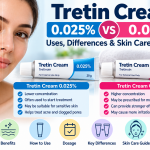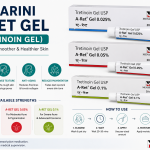
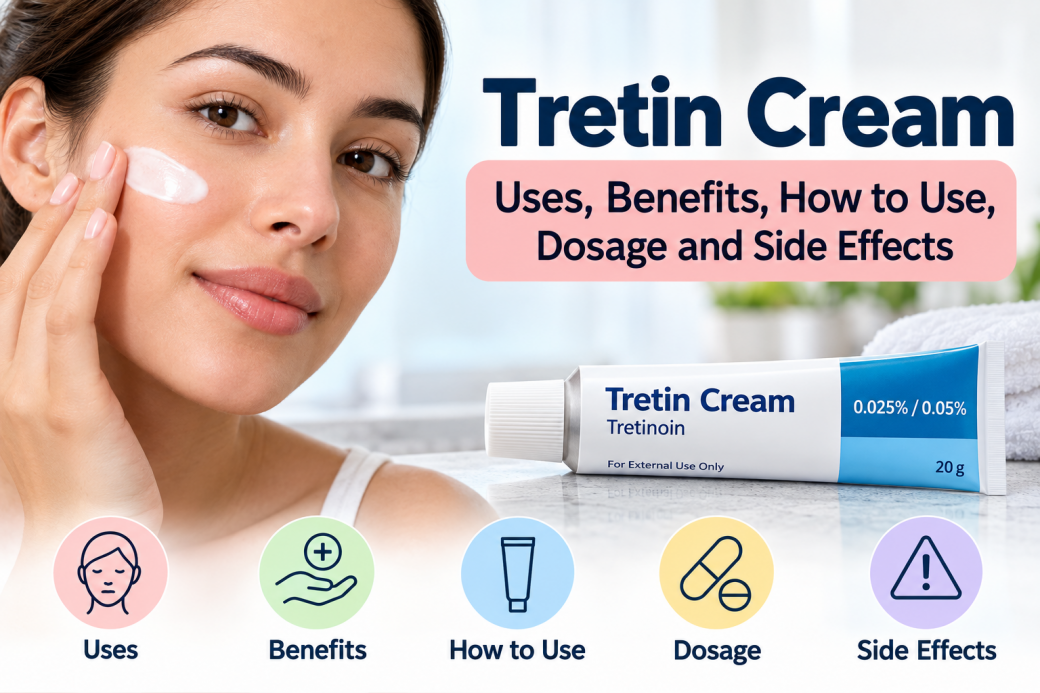
Tretin Cream contains tretinoin, a topical retinoid derived from vitamin A, commonly used in dermatology to manage acne. It works by influencing skin cell growth and shedding, helping prevent clogged pores and supporting clearer-looking skin over time.
Doctors may also prescribe tretinoin cream for uneven skin texture and pigmentation. However, it can cause dryness, redness, peeling, and increased sensitivity to sunlight, particularly during the first few weeks of treatment.
What Is Tretin Cream?
Tretin Cream is a topical preparation containing tretinoin, a prescription retinoid. It is available in different strengths, depending on the product and prescription.
Tretinoin is primarily used as part of an acne treatment plan. By helping normalise skin cell shedding inside hair follicles, it can reduce the formation of comedones, including blackheads and whiteheads.
Because tretinoin can be irritating, healthcare professionals generally introduce it gradually and adjust it based on skin tolerance and their instructions.
What Is Tretin Cream Used For?
The most established use of topical tretinoin is treating acne vulgaris. A healthcare professional may recommend it for different types of acne, especially when clogged pores are a major factor.
Common uses may include:
- Management of acne and clogged pores
- Reduction of blackheads and whiteheads
- Prevention of new acne lesions
- Improvement of uneven skin texture associated with acne
- Supporting smoother-looking skin as part of a dermatologist-directed skincare plan
Tretin cream may also be prescribed for other dermatological purposes. These uses depend on the formulation, strength, local labelling, and individual patient circumstances.
How Does Tretinoin Work?
Tretinoin affects the way skin cells develop and shed. Acne can develop when dead skin cells and sebum accumulate within hair follicles, contributing to blocked pores.
Topical tretinoin helps normalise this process. Over time, this can make it more difficult for pores to become blocked and may help reduce the formation of new acne lesions.
Tretinoin does not usually produce immediate results. Some people notice irritation early in treatment before seeing noticeable improvement. Consistent use, as directed by a doctor, is important.
Benefits of Tretin Cream
When prescribed appropriately, Tretin Cream may provide several benefits for people with acne.
1. Helps Unclog Pores
Tretinoin promotes more normal skin cell turnover, helping reduce the buildup of cells that can contribute to blocked pores.
2. Helps Control Acne
Regular use can help reduce the formation of new comedones and acne lesions as part of an appropriate acne treatment regimen.
3. Improves Skin Texture
As acne improves, tretinoin may help create smoother, more even-looking skin texture.
4. May Help With Post-Acne Discolouration
By increasing skin-cell turnover, tretinoin may be part of dermatologist-directed treatment plans for certain types of uneven pigmentation after acne. However, it should not be considered a universal treatment for every type of dark spot.
Tretin Cream Strengths
Tretinoin creams are available in different concentrations. Common strengths include Tretin 0.025% cream, Tretin 0.05% cream, and Tretin 0.1% cream, although availability varies by country and product.
Tretin 0.05% cream, and Tretin 0.1% cream, although availability varies by country and product.
A higher concentration is not automatically better for everyone. Stronger formulations can produce more irritation, and the appropriate strength depends on factors such as:
- Acne severity
- Skin sensitivity
- Previous retinoid use
- Other skincare products or medicines
- Individual treatment goals
- Tolerance to the medication
Your healthcare professional can determine the appropriate strength for you.
How to Use Tretin Cream
Use Tretin Cream exactly as prescribed. A typical application process is:
- Gently clean your face with a mild cleanser.
- Pat the skin dry rather than rubbing it.
- Allow the skin to become completely dry before application if advised by your healthcare professional.
- Apply a thin layer of Tretin Cream to the affected acne-prone area.
- Avoid the eyes, lips, corners of the nose, and broken or irritated skin.
- Wash your hands after applying the cream.
- Follow your prescribed frequency rather than applying extra cream to speed up results.
Apply tretinoin in the evening because it can increase sensitivity to sunlight.
Using more cream does not make acne disappear faster. Too much can increase irritation, dryness, and peeling.
What Is the Recommended Tretin Cream Dosage?
For topical medicines, “dosage” generally refers to the amount, frequency, and area of application rather than a tablet-style dose.
The right amount and frequency depend on the tretinoin strength and your individual treatment plan. Many patients are instructed to begin with a small amount and use it less frequently if irritation is a concern.
A healthcare professional may recommend gradually increasing application frequency as the skin becomes accustomed to treatment.
Do not change the concentration or frequency without medical advice.
When Will Tretin Cream Start Working?
Tretinoin usually requires consistent, long-term use. Acne may not improve immediately, and some people experience temporary worsening or irritation early in treatment.
Visible improvement may take several weeks, while more substantial results can require longer-term treatment.
Stopping treatment too early because results aren’t immediate may prevent you from getting its full potential benefit. If your acne is worsening significantly or you develop severe irritation, contact your healthcare professional rather than simply increasing or stopping the treatment.
Tretin Cream Side Effects
Like other topical retinoids, tretinoin can cause skin irritation, especially when you first start treatment.
Common side effects can include:
- Dry skin
- Redness
- Peeling or flaking
- Burning or stinging
- Itching
- Increased sensitivity to sunlight
- Temporary irritation around the application area
These effects can sometimes improve as the skin becomes accustomed to treatment.
However, severe irritation, swelling, blistering, significant pain, or a serious allergic reaction requires prompt medical attention.
How to Reduce Tretinoin Irritation
Several skincare practices can help reduce unnecessary irritation:
Use a Gentle Cleanser
Avoid harsh scrubs, strong soaps, and aggressive exfoliation while your skin is adapting to tretinoin.
Moisturize Regularly
A suitable non-comedogenic moisturiser can help reduce dryness and support the skin barrier.
Use Sun Protection
Tretinoin can make skin more sensitive to sunlight. Use a broad-spectrum sunscreen and protect your skin from excessive sun exposure.
Introduce Treatment Gradually
If your healthcare professional recommends starting less frequently, follow that schedule. Increasing use too quickly can cause unnecessary irritation.
Avoid Excessive Exfoliation
Combining tretinoin with multiple exfoliating products can increase irritation. Discuss other active skincare ingredients with your dermatologist or healthcare professional.
Tretin Cream Precautions
Before using Tretin Cream, tell your healthcare professional about your medical history and other medicines or skincare products you use.
Avoid applying tretinoin to:
- Sunburned skin
- Cuts or abrasions
- Eczema-affected skin unless specifically directed
- Areas with severe irritation
- Eyes and mucous membranes
Keep the product away from children and use it only as directed.
Because tretinoin can increase sensitivity to sunlight, limit excessive sun exposure and use appropriate sun protection during treatment.
Can Tretin Cream Be Used Every Day?
Some people may eventually use tretinoin daily, while others may need a less frequent schedule because of skin sensitivity.
Follow daily application only if it fits your prescribed product and treatment plan. If daily use causes significant irritation, speak with your healthcare professional rather than applying more moisturiser and continuing despite severe symptoms.
Can You Use Tretin Cream During Pregnancy?
Pregnancy is an important consideration with topical retinoids. Topical tretinoin is generally avoided during pregnancy as a precaution.
If you are pregnant, planning pregnancy, or think you may be pregnant, speak with your healthcare professional before using Tretin Cream. Do not start, stop, or substitute prescription treatment without professional advice.
People who are breastfeeding should also discuss tretinoin use with a healthcare professional, particularly regarding application near the chest or areas where an infant could come into contact with the medicine.
Tretin Cream and Other Skincare Products
Some skincare ingredients can increase irritation when combined with tretinoin. Depending on your skin and treatment plan, your healthcare professional may advise caution with products containing:
- Strong exfoliating acids
- Abrasive scrubs
- Other topical retinoids
- Certain acne treatments
- Alcohol-heavy or irritating products
Not every combination is inappropriate, but using several potentially irritating products at once can worsen dryness and redness.
A simple routine containing a gentle cleanser, moisturiser, prescribed treatment, and sunscreen is often easier for sensitive skin to tolerate.
What Happens If You Miss an Application?
If you forget to apply Tretin Cream, don’t make up for it by applying more at the next application.
Follow your usual schedule unless your healthcare professional has given you different instructions. Consistency over time is more important than using excessive amounts.
Frequently Asked Questions
Is Tretin Cream good for acne?
Tretinoin is an established topical treatment for acne. It helps normalise skin-cell turnover and can reduce clogged pores and the formation of new acne lesions.
Can Tretin Cream remove dark spots?
Some dermatologist-directed treatment plans may use tretinoin for uneven pigmentation, including certain post-acne marks. However, identify the cause of pigmentation before treatment.
Can I apply Tretin Cream during the day?
Tretinoin is commonly applied in the evening. Follow the instructions provided with your prescription and product.
Does Tretin Cream make acne worse initially?
Some people experience temporary irritation or a temporary worsening of acne when starting treatment. Discuss significant or persistent worsening with a healthcare professional.
How much Tretin Cream should I apply?
Use the amount your healthcare professional recommends. Applying more does not accelerate results and can increase irritation.
Can I use moisturiser with Tretin Cream?
A suitable moisturiser can help manage tretinoin-related dryness. If you are unsure which products are appropriate for your skin, ask a dermatologist or pharmacist.
Final Thoughts
Tretin Cream (tretinoin) is a prescription topical retinoid primarily used for acne. It helps normalise skin cell growth and shedding, which can reduce clogged pores and support clearer skin over time.
Because tretinoin can cause dryness, peeling, redness, and increased sun sensitivity, use it correctly and introduce it under professional guidance. Avoid using too much, protect your skin from sunlight, and keep a gentle skincare routine.
If you are considering Tretin Cream for acne, pigmentation, or another skin concern, speak with a qualified healthcare professional to determine whether tretinoin is appropriate and which strength and application schedule suit you.
Medical disclaimer: This article is for general educational purposes and does not replace professional medical advice, diagnosis, or treatment. Always follow the prescribing information supplied with your medicine and consult a qualified healthcare professional for personalised advice.