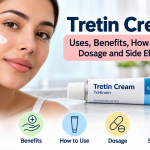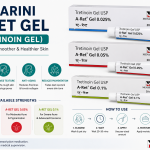
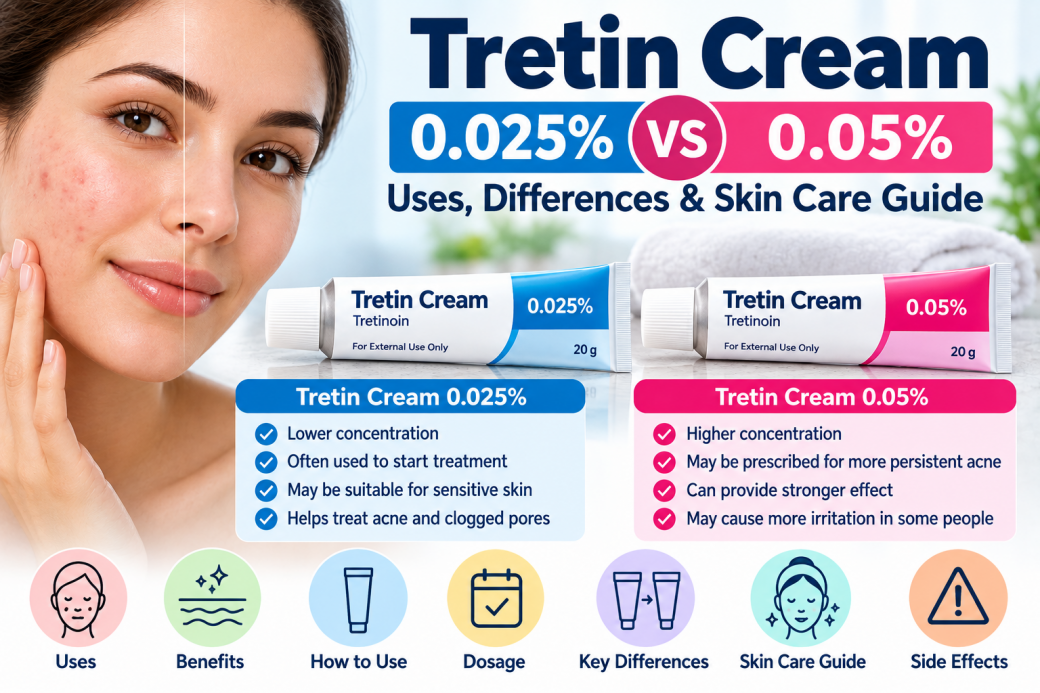
Tretin Cream contains tretinoin, a topical retinoid commonly prescribed to treat acne. It works by influencing skin cell turnover and helping prevent clogged pores. Tretinoin comes in different strengths, including 0.025% and 0.05%, and the right strength depends on factors such as skin sensitivity, acne severity, prior retinoid use, and professional medical advice.
Although both strengths contain the same active ingredient, their concentrations differ. A higher concentration isn’t necessarily more appropriate for everyone. It can also cause more noticeable irritation, especially when you first start treatment.
This guide explains the uses, differences, application, skin-care considerations, side effects, and precautions associated with Tretin Cream 0.025% and 0.05%.
What Is Tretin Cream?
Tretin Cream is a topical formulation containing tretinoin, a vitamin A derivative known as a retinoid. Dermatologists primarily use it to treat acne.
Acne can develop when dead skin cells and oil build up inside hair follicles, clogging pores. Tretinoin helps normalise the process by affecting how skin cells develop and shed.
With consistent use, tretinoin can help reduce the formation of comedones such as blackheads and whiteheads and may help control new acne lesions.
Tretinoin is a prescription medicine in many countries, so use it as directed by a healthcare professional.
Tretin Cream 0.025% vs 0.05%
The main difference between the two products is their tretinoin concentration:
| Feature | Tretin Cream 0.025% | Tretin Cream 0.05% |
|---|---|---|
| Active ingredient | Tretinoin | Tretinoin |
| Concentration | 0.025% | 0.05% |
| Relative concentration | Lower | Higher |
| Common consideration | Often considered when starting topical tretinoin | May be considered when a stronger formulation is appropriate |
| Irritation potential | Can cause irritation | May cause more irritation |
| Suitable for everyone? | No | No |
The concentration is only one factor when selecting a tretinoin cream. A healthcare professional may consider your skin type, acne, previous treatments, tolerance, and other medications or skincare products.
What Is Tretin Cream 0.025% Used For?
Tretin Cream 0.025% contains a lower concentration of tretinoin and may be prescribed to manage acne.
It can help:
- Reduce clogged pores
- Manage blackheads and whiteheads
- Reduce formation of new acne lesions
- Improve uneven skin texture associated with acne
- Support a longer-term acne treatment routine
A lower concentration may be considered when someone is new to topical tretinoin or is particularly concerned about irritation. However, that doesn’t mean 0.025% is automatically the right starting strength for everyone.
What Is Tretin Cream 0.05% Used For?
Tretin Cream 0.05% contains twice the tretinoin concentration of a 0.025% formulation.
A healthcare professional may prescribe it for acne when they determine this concentration is appropriate. Like 0.025%, it works by influencing skin-cell turnover and helping reduce the tendency of pores to become blocked.
Higher concentrations can increase irritation. Therefore, using 0.05% without professional guidance simply because it is stronger may not provide a better experience or faster results.
How Does Tretinoin Work?
Tretinoin affects how skin cells grow and shed. One important effect in acne treatment is reducing the abnormal accumulation of skin cells inside hair follicles.
When pores become blocked by oil and dead skin cells, comedones can form. By helping normalise this process, tretinoin can make pores less likely to become blocked.
Tretinoin also affects skin cell turnover, which can change skin texture over time.
The process is gradual. Tretinoin isn’t designed to provide overnight improvement, and consistent use matters.
Is 0.05% Better Than 0.025%?
Not necessarily.
The appropriate tretinoin strength depends on the individual. A higher concentration contains more tretinoin, but that doesn’t automatically mean it will produce better results for everyone.
A stronger formulation may also produce more dryness, redness, peeling, burning, or other irritation.
For some people, 0.025% may provide an appropriate balance between treatment and tolerability. Others may be prescribed 0.05% depending on their condition and previous response.
The goal is not simply to use the strongest available concentration. The goal is to use an appropriate treatment consistently and safely.
How to Use Tretin Cream 0.025% or 0.05%
Always follow your healthcare professional’s directions and the product label.
A typical application routine may include the following:
Step 1: Clean Your Skin
Gently wash the affected area with a mild cleanser. Avoid aggressive scrubbing, as it can increase irritation.
Step 2: Dry Your Skin
Gently pat the skin dry. Depending on your healthcare professional’s instructions, you may be advised to allow your skin to become completely dry before applying tretinoin.
Step 3: Apply a Thin Layer
Use a small amount and spread a thin layer over the affected acne-prone area.
Applying extra cream will not make tretinoin work faster.
Step 4: Avoid Sensitive Areas
Keep the product away from the eyes, lips, corners of the nose, and broken or severely irritated skin.
Step 5: Wash Your Hands
Wash your hands after applying the cream unless you’re treating your hands.
Use tretinoin in the evening because it can increase sensitivity to sunlight.
How Often Should You Apply Tretin Cream?
The frequency depends on your prescription and how your skin responds.
Some people may be instructed to begin with less frequent applications before gradually increasing use. Others may start with a different schedule.
If your skin becomes very irritated, do not automatically increase the amount or frequency. Speak with your healthcare professional about whether the treatment schedule needs to be adjusted.
Tretin Cream 0.025% and 0.05% Side Effects
Both strengths can cause local skin reactions, especially early in treatment.
Common effects may include:
- Dryness
- Peeling
- Redness
- Mild burning or stinging
- Itching
- Increased sensitivity to sunlight
- Skin irritation
These effects can sometimes become less noticeable as the skin adjusts.
However, severe irritation, significant swelling, blistering, intense pain, or symptoms of a serious allergic reaction require prompt medical attention.
Why Does Tretinoin Cause Peeling?
Tretinoin influences skin-cell turnover. During the initial treatment period, the skin may become dry and flaky as it adjusts to the medication.
Peeling does not necessarily mean the medicine is working better. Excessive peeling can indicate irritation.
Using more tretinoin will not necessarily speed up skin-cell turnover in a beneficial way. Instead, it can irritate the skin barrier.
Skin Care While Using Tretin Cream
A simple skincare routine can make topical tretinoin easier to tolerate.
Use a Gentle Cleanser
Choose a mild cleanser and avoid aggressive scrubbing.
Moisturize
A suitable moisturiser can help reduce dryness and support the skin barrier. Products labelled non-comedogenic may be preferred by people prone to acne.
Use Sunscreen
Tretinoin can increase sensitivity to sunlight. Use broad-spectrum sunscreen and take reasonable measures to reduce excessive sun exposure.
Avoid Excessive Exfoliation
Scrubs and multiple strong exfoliating products can increase irritation when combined with tretinoin.
If you use other active skincare ingredients, discuss them with a healthcare professional or pharmacist.
Tretin Cream for Dark Spots and Uneven Skin Tone
Tretinoin may be included in certain dermatologist-directed treatment plans for uneven pigmentation or post-acne discolouration.
However, not every dark spot has the same cause. Pigmentation can result from acne, sun exposure, hormonal changes, inflammation, or other skin conditions.
Therefore, tretinoin should not be considered a universal treatment for pigmentation.
Sun protection is particularly important when treating uneven skin tone because ultraviolet exposure can worsen pigmentation.
When Will Tretin Cream Start Working?
Tretinoin generally requires patience.
During the first few weeks, some people may experience dryness, irritation, or changes in their acne. Noticeable improvement typically takes time, and you may need continued treatment to maintain results.
If your acne worsens significantly, you develop severe irritation, or you are concerned about your response to treatment, consult your healthcare professional.
Do not increase the concentration simply because you want faster results.
Can You Switch From 0.025% to 0.05%?
A healthcare professional may recommend changing strengths when appropriate.
For example, if someone tolerates a lower concentration well but requires a different treatment approach, a clinician may consider a stronger formulation.
However, switching strengths without professional guidance is not recommended.
The correct concentration depends on individual factors, and a higher strength may cause more irritation.
Tretin Cream and Other Acne Treatments
Tretinoin may sometimes be used as part of a broader acne treatment plan.
Depending on the type and severity of acne, a healthcare professional may recommend other treatments alongside tretinoin.
However, combining multiple active ingredients without guidance can increase irritation.
Examples of products that may require particular care include:
- Other topical retinoids
- Exfoliating acids
- Abrasive scrubs
- Certain acne medications
- Strong alcohol-based skincare products
Ask your healthcare professional or pharmacist about your complete skincare routine before adding additional active treatments.
Who Should Avoid or Use Caution With Tretin Cream?
Tell your healthcare professional if you:
- Are pregnant or planning pregnancy
- Are breastfeeding
- Have very sensitive or severely irritated skin
- Have eczema or another inflammatory skin condition
- Have a history of reactions to topical retinoids
- Are using other prescription acne medicines
- Regularly use potentially irritating skincare products
Topical tretinoin is generally avoided during pregnancy as a precaution. If you are pregnant or planning pregnancy, speak with your healthcare professional before using it.
Frequently Asked Questions
Is Tretin Cream 0.025% weaker than 0.05%?
Yes. Tretin Cream 0.025% contains a lower concentration of tretinoin than the 0.05% formulation.
Can I start directly with 0.05%?
The appropriate starting strength depends on your skin and treatment plan. A healthcare professional should determine whether 0.05% is suitable.
Does 0.05% work faster than 0.025%?
A higher concentration doesn’t necessarily mean faster or better results for everyone. Tolerability and consistent use matter.
Can Tretin Cream remove acne scars?
Tretinoin may improve certain aspects of skin texture and post-acne discolouration, but it does not remove all types of acne scars. Deep or raised scars may require other dermatological treatments.
Can I use Tretin Cream every night?
Some people may eventually use tretinoin every night, but the appropriate frequency depends on the prescription and individual skin tolerance.
Should I apply more if I have severe acne?
No. Applying more does not make tretinoin work faster and may increase irritation. Use the prescribed amount.
Final Thoughts
Tretin Cream 0.025% and 0.05% both contain tretinoin, but they differ in concentration. Both can treat acne, but the right strength depends on individual factors such as skin sensitivity, acne severity, previous retinoid exposure, and professional medical advice.
The 0.025% formulation has a lower concentration, while 0.05% has a higher concentration and may cause more irritation. Neither strength is universally better.
Whichever strength is prescribed, apply tretinoin as directed, use a gentle skincare routine, moisturise when appropriate, and protect your skin from excessive sun exposure. Results take time, so consistent, appropriate use matters more than applying too much.
Medical disclaimer: This article is for general education and does not replace medical diagnosis or treatment. Tretinoin is a prescription medicine in many markets. Consult a qualified healthcare professional before starting, changing, or stopping treatment.