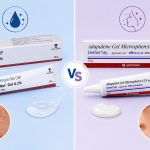
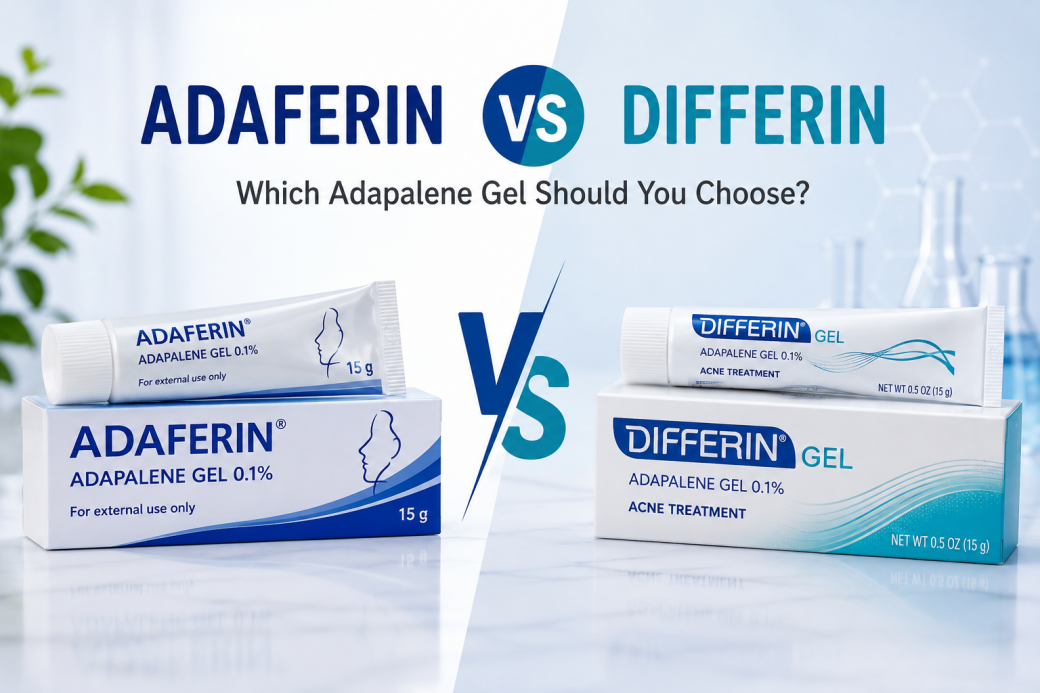
If you’ve spent any time browsing an Indian pharmacy website or scrolling through skincare forums looking for a solution to stubborn acne, you’ve almost certainly come across two names: Adaferin and Differin. Both are built around the same active ingredient — adapalene — and both promise clearer, smoother skin. So why do they have different names, different price tags, and seemingly different fan bases online?
This post breaks down what Adaferin and Differin actually are, how they compare, and how to decide which one makes sense for you.
What Is Adapalene, and Why Does It Matter?
Before comparing the two products, it helps to understand what’s actually doing the work inside the tube. Adaferin Gel contains adapalene, a vitamin A derivative in the retinoid family, which works by reducing inflammation, preventing clogged pores, and increasing skin cell turnover. This combination of effects is what makes adapalene so effective against comedonal acne (blackheads and whiteheads) as well as inflammatory breakouts.
Because adapalene speeds up cell turnover, it helps prevent dead skin cells from mixing with oil and clogging pores in the first place — which is why dermatologists often describe it as a preventive treatment rather than a quick spot fix. It typically takes 8–12 weeks of consistent use to see the full benefit, and skin often looks slightly worse (drier, flakier) before it looks better.
Since only very small amounts of adapalene are absorbed into the body, its effects are primarily on the skin’s surface, which is part of why it’s considered one of the gentler retinoids compared to tretinoin, while still being effective.
Adaferin Gel: The Basics
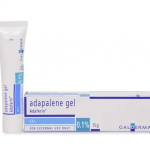
Adaferin is manufactured and marketed in India by Galderma India Pvt Ltd, with a composition of Adapalene (0.1% w/w). It’s used to manage acne, skin soreness, itching, blackheads, acne scars, spots, and pimples.
A few practical details about Adaferin:
- Strength: 0.1% adapalene (the standard, entry-level concentration)
- Manufacturer: Galderma India Pvt Ltd
- Availability: Primarily sold in India through pharmacies and online platforms like 1mg, PharmEasy, Netmeds, and Apollo Pharmacy
- Prescription status: Sold as a prescription medicine in India, though enforcement varies by pharmacy
- Suitability: Suitable for adults and adolescents aged 12 years and older
It should not be used during pregnancy or if you are planning to become pregnant, and it’s also not recommended for application on broken skin, cuts, scrapes, sunburn, or eczema. That last point is worth remembering if you already have compromised or sensitised skin — adapalene can make irritation worse rather than better in that situation.
Differin Gel: The Basics
Differin is the globally recognised, original branded version of adapalene gel, developed by Galderma. In the United States, it’s notable as the first new FDA-approved over-the-counter active ingredient to treat acne in more than 30 years, meaning you can get prescription-strength adapalene without a prescription. The product markets itself as being oil-free and formulated so it won’t leave your face sticky.
Key details about Differin:
- Strength: Most commonly 0.1% adapalene gel (a 0.3% strength also exists and has been studied for photoaging and more resistant acne)
- Manufacturer: Galderma
- Availability: Sold globally — over-the-counter in the U.S., and via prescription or pharmacy purchase in many other countries, including India, where it’s typically imported and sold at a higher price point
- Formulation: Classic clear gel base, though Differin also sells cream and moisturiser variants in some markets
The Core Similarity: Same Active Ingredient, Same Company
Here’s the detail that surprises a lot of people: Adaferin and Differin aren’t really “competing” formulas in the way, say, two different skincare brands might compete. According to comparative reporting on adapalene brands in the Indian market, Adaferin is essentially Galderma India’s exact equivalent to Differin — same parent company, same quality, but priced reasonably for the Indian market. In other words, Differin is the internationally imported version, while Adaferin is Galderma’s own localised, more affordable version made specifically for India.
This matters a lot when you’re weighing the two. You’re not choosing between “the real thing” and “a knockoff” — you’re largely choosing between an imported product and a locally manufactured product from the very same company, with the same active ingredient and concentration.
Clinical research backs up the idea that generic and branded adapalene formulations tend to perform similarly. Multiple pharmaceutical trials have directly compared other adapalene 0.1% gels with Differin to establish therapeutic equivalence and safety in treating acne vulgaris, and studies comparing 0.3% adapalene gel with Differin 0.3% have followed the same approach. These aren’t isolated one-off comparisons — they reflect a broader industry pattern in which regulators require generic and localised adapalene formulations to demonstrate that they perform the same as the original Differin before they can be sold.
Where They Actually Differ
If the active ingredient is identical, what’s left to compare? A few things:
1. Price: This is the single biggest practical difference for most people, especially in India. Adaferin is positioned as the budget-friendly local option, while Differin, being imported, carries a noticeably higher price tag for the same 0.1% adapalene concentration. If cost is a concern — and for a treatment you may need to use for months, it often is — Adaferin has a clear advantage without sacrificing the active ingredient.
2. Availability: Differin has a much larger global footprint and is easy to find in the U.S., Europe, and other Western markets, often over the counter. Adaferin, by contrast, is primarily distributed within India. If you’re outside India, you’re far more likely to encounter Differin than Adaferin on pharmacy shelves.
3. Formulation Texture and Inactive Ingredients: While the active ingredient concentration is the same, gels from different manufacturing batches or regional formulations can vary slightly in their inactive ingredients — things like the base gel texture, preservatives, or moisturising agents. Some users report subtle differences in how quickly a product absorbs or how it feels on the skin, though this is more anecdotal than clinically documented, and the actual acne-fighting performance shouldn’t differ meaningfully.
4. Regulatory Status: Differin in the U.S. can be purchased over the counter. Adaferin in India is generally sold as a prescription product, so the purchasing experience differs depending on where you live.
How to Use Either Product
Whichever one you choose, the application guidance is essentially the same, since the mechanism of action is identical:
- Apply a thin, pea-sized layer to clean, dry skin, typically once daily at night
- Avoid sensitive areas like the eyes, lips, and corners of the nose
- If accidental contact with these areas occurs, rinse thoroughly with water
- Pair it with a gentle, fragrance-free moisturizer, since dryness and peeling are common in the first few weeks
- Use sunscreen during the day, since adapalene can increase skin’s sensitivity to sunlight
- Avoid applying to broken skin, sunburned areas, or skin with eczema
- Don’t combine it carelessly with other strong actives (like benzoyl peroxide, physical scrubs, or other retinoids) without guidance, as this raises the risk of irritation
Most people notice some initial dryness, redness, or flaking — often called “retinization” or the “purging” phase — before their skin adjusts. This is a normal part of starting any retinoid and typically settles down within a few weeks if you stick with it and moisturize consistently.
Which One Should You Choose?
For most people, the decision comes down to geography and budget rather than efficacy:
- If you’re in India and want to save money: Adaferin is a sensible choice. It’s made by the same parent company as Differin, contains the identical 0.1% adapalene concentration, and costs meaningfully less.
- If you’re outside India, or specifically want the internationally recognized branded product: Differin is more widely available and, in markets like the U.S., can be purchased over the counter without a prescription.
- If you have very sensitive or reactive skin, consider starting with adapalene every other night, regardless of which brand you choose, and build up tolerance gradually.
- If you’re pregnant, trying to conceive, or have broken/inflamed skin: Neither product is recommended — speak with a dermatologist about alternatives.
A Quick Word of Caution
While adapalene is available without a prescription in some countries, it’s still an active pharmaceutical ingredient that can interact with other skincare products and isn’t suitable for everyone. This post is meant to give you a general comparison, not personalised medical advice. If you have persistent, severe, or cystic acne, or if you’re unsure how adapalene might interact with your current routine or any other medications, it’s worth checking in with a dermatologist before starting either product.
The Bottom Line
Adaferin and Differin are, in practical terms, twins rather than rivals. Both deliver the same 0.1% adapalene, both come from Galderma, and both work the same way on your skin — reducing oil, unclogging pores, and speeding up cell turnover to prevent and treat acne over time. The real differences come down to where you live, what you’re willing to pay, and how easily you can access each product. If you can get either one reliably, the choice largely becomes a matter of budget and convenience rather than which product will clear your skin better.