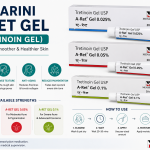
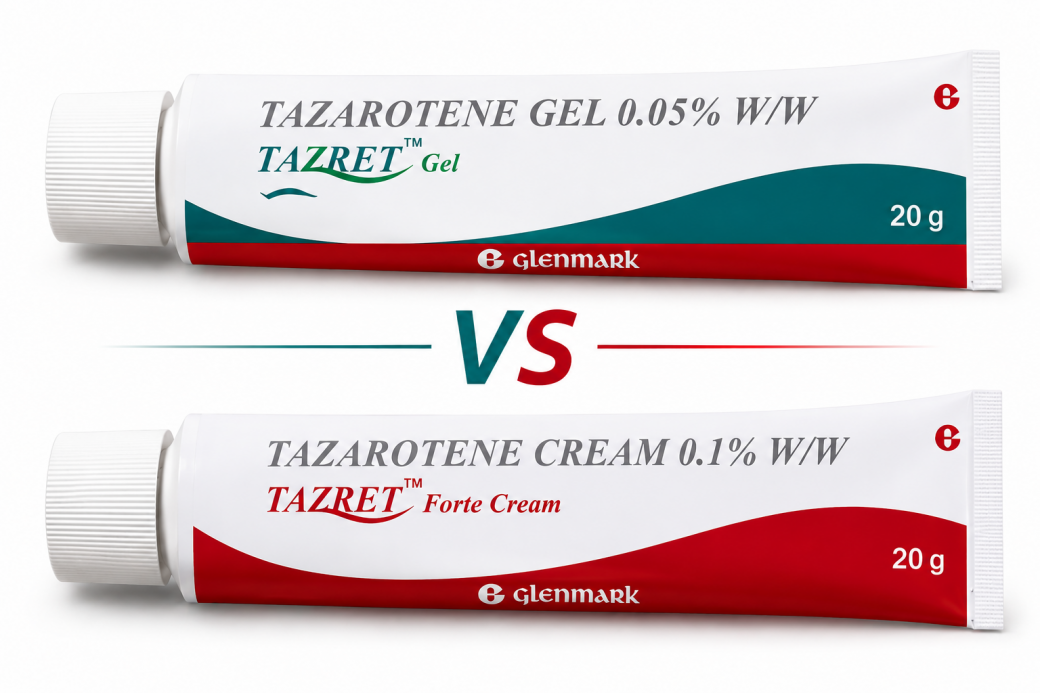
Tazarotene is a prescription topical retinoid derived from vitamin A that is widely used to treat acne vulgaris, plaque psoriasis, and signs of photoaging. Available in both gel and cream formulations, Tazarotene helps speed up skin cell turnover, unclog pores, reduce inflammation, and improve overall skin texture.
Many people wonder whether Tazarotene gel or cream is the better option. While both contain the same active ingredient, they differ in texture, absorption, skin feel, and suitability for different skin types.
This guide explains everything you need to know about Tazarotene gel vs cream, including their benefits, differences, side effects, and how to choose the right one for your skin.
What Is Tazarotene?
Tazarotene belongs to the third generation of topical retinoids. After application, it converts into its active form, tazarotenic acid, which binds to retinoic acid receptors (RARs). This action helps normalise skin cell growth and reduces inflammation.
Dermatologists prescribe Tazarotene for:
- Acne vulgaris
- Plaque psoriasis
- Fine lines and wrinkles
- Uneven skin tone
- Sun-damaged skin
- Hyperpigmentation caused by acne
Common strengths include:
Both gel and cream contain the same active medication but differ in their base ingredients.
Tazarotene Gel vs Cream: Quick Comparison
| Feature | Tazarotene Gel | Tazarotene Cream |
|---|---|---|
| Texture | Lightweight | Rich and moisturizing |
| Skin Type | Oily, combination | Dry, sensitive, mature |
| Absorption | Fast | Moderate |
| Finish | Matte | Hydrating |
| Oil Control | Excellent | Moderate |
| Irritation Risk | Slightly higher | Lower |
| Best For | Acne-prone skin | Dry skin and anti-aging |
| Moisturizing Effect | Minimal | Higher |
How Does Tazarotene Work?
Regardless of whether you use the gel or cream, Tazarotene works by:
- Increasing skin cell turnover
- Preventing clogged pores
- Reducing inflammation
- Improving collagen production
- Smoothing rough skin
- Reducing acne lesions
- Fading dark spots over time
These effects help improve both inflammatory and non-inflammatory acne while enhancing skin texture.
Tazarotene Gel: Benefits
Tazarotene gel is often preferred for oily and acne-prone skin because of its lightweight formula.
Advantages
Fast Absorption
The gel dries quickly and leaves little residue, making it suitable for daytime use if recommended by your dermatologist.
Better for Oily Skin
Its non-greasy texture helps control excess oil without making the skin feel heavy.
Effective Acne Treatment
The gel penetrates pores efficiently, making it particularly effective for:
- Blackheads
- Whiteheads
- Papules
- Pustules
Less Shine
Many users prefer the matte finish, especially those with combination or oily skin.
Tazarotene Cream: Benefits
The cream formulation contains moisturising ingredients that help reduce dryness associated with retinoid therapy.
Advantages
More Hydrating
Creams provide additional moisture, making them ideal for people who experience dry or flaky skin.
Better for Sensitive Skin
Although irritation is still possible, the cream base generally feels gentler than the gel.
Excellent for Anti-Aging
Many dermatologists recommend cream formulations for:
- Fine lines
- Wrinkles
- Rough texture
- Sun damage
Comfortable Daily Use
People with mature skin often find creams easier to tolerate during long-term treatment.
Which Is Better for Acne?
For acne treatment, Tazarotene gel is often considered the better option because it:
- Absorbs quickly
- Controls oil
- Penetrates clogged pores efficiently
- Leaves a non-greasy finish
However, if your acne is accompanied by dryness or irritation, your dermatologist may recommend the cream instead.
Which Is Better for Psoriasis?
Both formulations are FDA-approved for plaque psoriasis.
The choice depends on the affected area.
Gel may be preferred for:
- Scalp
- Hair-bearing areas
- Oily skin
Cream works well for:
- Arms
- Legs
- Elbows
- Dry plaques
The moisturizing base of the cream can make scaling more manageable.
Which Is Better for Anti-Aging?
Most dermatologists recommend Tazarotene cream for treating:
- Fine lines
- Wrinkles
- Uneven pigmentation
- Rough skin texture
- Sun damage
The moisturizing ingredients improve comfort during long-term use.
Side Effects of Tazarotene Gel and Cream
Both formulations share similar side effects because they contain the same active ingredient.
Tazarotene Common side effects include:
- Dryness
- Peeling
- Redness
- Burning
- Stinging
- Itching
- Increased sun sensitivity
These effects usually improve after several weeks as the skin adapts.
How to Reduce Irritation
To minimise irritation:
- Apply only a pea-sized amount.
- Use it at night unless instructed otherwise.
- Wait 20–30 minutes after washing your face before application.
- Use a gentle moisturizer.
- Apply sunscreen every morning.
- Avoid harsh exfoliants and alcohol-based skincare products.
- Introduce treatment gradually (2–3 nights per week).
Who Should Choose Tazarotene Gel?
The Tazarotene gel may be ideal if you have:
- Oily skin
- Combination skin
- Acne-prone skin
- Frequent clogged pores
- Excess facial oil
- Humid climate conditions
Who Should Choose Tazarotene Cream?
The cream may be better if you have:
- Dry skin
- Mature skin
- Sensitive skin
- Fine lines
- Wrinkles
- Sun-damaged skin
- Mild psoriasis with scaling
Can You Switch Between Gel and Cream?
Yes.
Many dermatologists switch patients between formulations based on:
- Seasonal skin changes
- Irritation
- Treatment goals
- Skin type
- Medication tolerance
For example:
- Gel during summer
- Cream during winter
Always consult your healthcare provider before changing formulations.
Tips for Using Tazarotene
To achieve the best results:
- Wash your skin with a mild cleanser.
- Pat dry completely.
- Wait 20–30 minutes.
- Apply a pea-sized amount.
- Avoid the eyes, lips, and nostrils.
- Follow with moisturiser if needed.
- Wear SPF 30 or higher every morning.
Consistency is key. Visible improvement usually occurs after 8 to 12 weeks of regular use.
Can Tazarotene Be Used with Other Skincare Products?
Yes, but carefully.
Compatible products include:
- Ceramide moisturizers
- Hyaluronic acid
- Gentle cleansers
- Niacinamide
- Sunscreen
Avoid combining Tazarotene with:
- Benzoyl peroxide (unless directed by a dermatologist)
- Strong exfoliating acids (AHAs/BHAs)
- Physical scrubs
- Alcohol-based toners
Using multiple irritating products together may increase redness and peeling.
Frequently Asked Questions
Is Tazarotene gel stronger than cream?
No. Both contain the same active ingredient at equivalent strengths. The difference lies in the formulation and skin feel rather than the medication itself.
Which works faster?
Many users find the gel absorbs more quickly, but clinical effectiveness is similar when the same strength is used consistently.
Is cream less irritating?
Generally, yes. The moisturizing base can make the cream easier to tolerate, especially for dry or sensitive skin.
Can I use Tazarotene every day?
Most people gradually build up to nightly use. Your dermatologist will recommend the best schedule based on your skin’s tolerance.
Can Tazarotene help fade acne scars?
It can improve post-inflammatory hyperpigmentation and skin texture over time, but it does not remove deep acne scars.
Is sunscreen necessary?
Absolutely. Tazarotene increases your skin’s sensitivity to sunlight, making daily sunscreen essential.
Final Verdict: Tazarotene Gel vs Cream
Both Tazarotene gel and Tazarotene cream are highly effective prescription retinoids that deliver excellent results for acne, psoriasis, and signs of ageing. The best choice depends on your skin type and treatment goals, not the active ingredient itself.
Choose Tazarotene gel if you have oily or acne-prone skin and prefer a lightweight, fast-absorbing formula that helps control excess oil.
Choose Tazarotene cream if your skin is dry, sensitive, or mature, or if you’re targeting fine lines, wrinkles, or sun damage and want a more moisturising formulation.
Whichever formulation you use, apply it consistently, use a gentle moisturiser, and wear broad-spectrum sunscreen every day. If you’re unsure which option is right for you, consult a dermatologist who can recommend the formulation best suited to your skin’s needs and help you achieve safe, effective results.