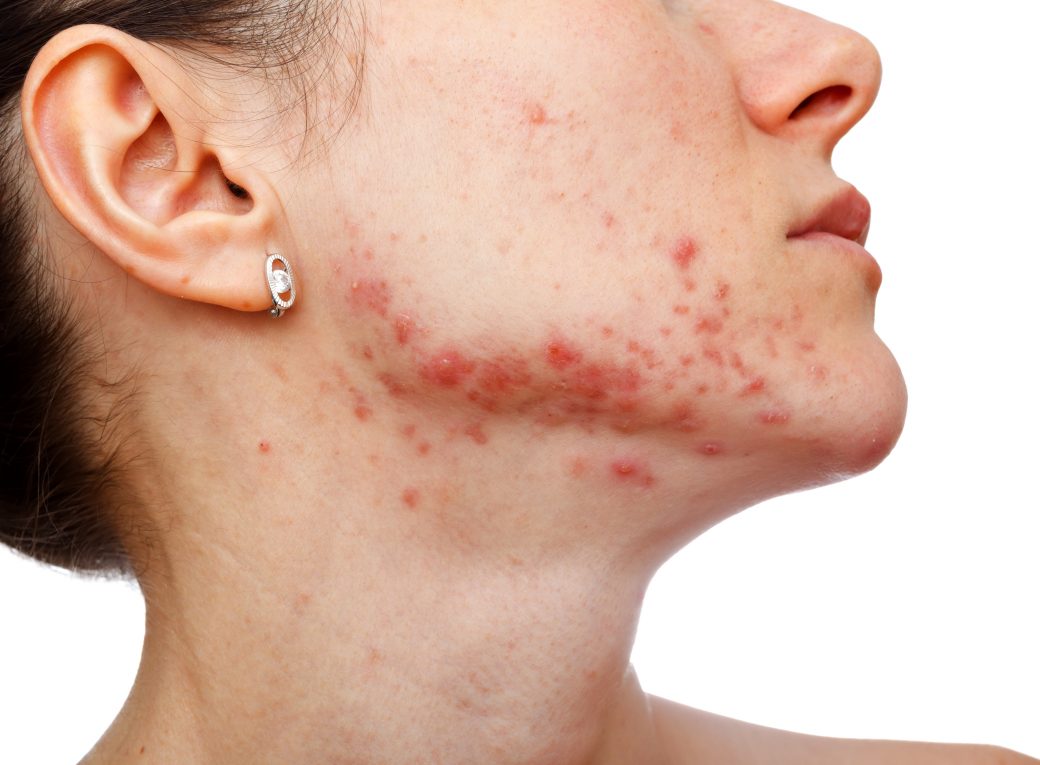
The desperate urge to find out a solution for acne problem takes minimum efforts to order a new acne product which you may like to try to get rid of acne. We understand your concern, but choosing any acne product won’t be enough unless you order the right one.
Following a regular skin care routine and adding a good acne remedy to it may do wonders for your skin. Make sure you give your skin time to heal from acne.
Effects of Acne
Acne Vulgaris, most commonly known as acne, is a long-term skin condition that occurs when hair follicles become clogged with oil and dead skin cells. It is characterized by whiteheads, blackheads, greasy skin, pimples and can also cause scarring. Acne on the skin can lead to reduced self-esteem and in severe cases, even thoughts of depression or suicide.
Acne generally affects skin that contains many oil glands, such as the face and upper parts of the back and chest. There are several methods available to eliminate acne, including lifestyle changes, acne removal procedures, and treatments. The lesions generally occur during adolescence, affecting almost 80-90% of teenagers. People may be affected before and after puberty as well.
Preparations to get rid of Acne
Experts recommend topical acne formulations for mild acne. These comprise topical agents that help eliminate acne from the skin surface. However, they may not address the actual cause beneath the skin. The compositions generally contain either antibiotic that prevents the growth of bacteria that caused the acne, or substances that help the skin to renew fast, and therefore reduce acne.
The topical remedies work by decreasing oil production, increasing skin cell turnover, fighting bacterial infection, and reducing inflammation. These can greatly help manage the frequency and severity of acne outbreaks. As your acne care regimen will depend on the kind of acne you have, it is best to consult a dermatologist before you apply any acne removal product to your skin.
Topical acne methods are applied to the skin to control mild acne. The formulations either contain antibiotics that inhibit the growth of bacteria that cause pustules, or they comprise agents that help the skin renew quickly and therefore help reduce acne.
Various lotions, creams, and gels are available to treat acne. Different acne care methods work in different ways. Listed below are some acne care methods. It is important that you read the leaflet in the packet as things such as how to apply the preparation and the precautions to take vary from one preparation to another.
Benzoyl Peroxide – This is a common anti-acne agent. It has three actions: it destroys germs, reduces inflammation, and helps unclog pores. The compound thus works well to clear inflamed spots as well as whiteheads and blackheads. It is available in different brand names and strengths. Here are some things to keep in mind while treating with benzoyl peroxide:
- Wash your face 20-30 minutes before using the cream.
- It may bleach clothes or hair that comes into contact with it.
- It can lead to mild skin irritation. If there is any irritation, it is best to stop using it till the irritation goes away.
Retinoids – These compounds are great for unblocking blocked pores. These include tretinoin, isotretinoin, and adapalene. They also help to reduce inflammation. They are often used to unblock pores, treat whiteheads, blackheads and inflamed spots. When you use retinoids:
-
- You may develop skin peeling and redness, which tend to settle over time.
- The acne can get a little worse before improving.
- Your skin may be sensitive to sunlight. It is, therefore, best to apply at night and wash off the next morning. Use sunscreen if you are out in the sun.
- Some common side effects of the topical solutions include irritation, dryness, and burning. It is, therefore, best to first start with a low-strength preparation and for a shorter duration.
- As it carries risk to unborn babies, you should not be pregnant or intend to become pregnant while starting the course of this application.
Topical Antibiotics – Several topical antibiotic preparations are used to treat acne. They decrease the number of bacteria and help to get rid of the inflammation. However, these methods do not have much effect on unplugging blocked pores. Therefore, they are excellent in relieving inflamed acne, but whiteheads and blackheads may remain.
Topical antibiotics are available only with a prescription. They may cause mild irritation, but they do not carry any other side effects. These are generally prescribed in combination with other medications. If you use them alone, it can increase the risk that the germ will become resistant to the antibiotic, making the overall acne regimen less effective.
Azelaic Acid – This alternative mostly works by unplugging blocked pores. Therefore, like retinoids, it helps clear whiteheads and blackheads. It has some effects on acne, but maybe not as much as benzoyl peroxide or antibiotics.
Combinations – Some acne care methods contain a mixture of ingredients. These have often been found to work better than any ingredient all alone.
No matter which method you opt for, it can take up to four to six weeks to notice any improvement. Most people often report a good response to acne care within six weeks. However, in some cases, it can take 3 to 4 months to get the best response and for the skin to be completely free of acne. Experts say one of the most common reasons acne care methods fail is that some people think they’re not working after a couple of weeks and give up. If you looking to buy careprost for your eyalsh growth longer, thicker and beautiful than visit our website and check the feature of products contains bimatoprost.
It is therefore recommended that you continue with any formulation for at least 6 weeks before deciding whether it is working. If there is absolutely no improvement even after six weeks of using the topical agent regularly, do not lose hope. Your dermatologist may add introduce another topical preparation which is likely to work.
After acne clears, it can flare up again if you stop the acne care regimen you were following earlier. Therefore, even after the spots are reduced, it is important to continue a maintenance program to prevent acne from recurring. Generally, maintenance therapy for 4-5 years is recommended to keep acne at bay, but your dermatologist is the right person to tell you how long to continue acne removal therapy.