Is your face being covered with hyperpigmentation?
Having discolouration and unwanted brown spots can be a pain to deal with. This page will help you learn more about what hyperpigmentation is, its causes, and how to prevent this condition.
What is Hyperpigmentation & its causes?
Hyperpigmentation is a common condition characterised by dark patches on the skin. This darkening occurs when there is an overproduction of melanin, the brown pigment which is responsible for providing the normal skin colour, and forms deposits in the skin.
Hyperpigmentation can affect people with any skin colour. However, some are more prone than others. It can be a result of excessive sun exposure and appear over time slowly or can occur suddenly. Other culprits can include hormonal changes, environmental factors, and lifestyle choices.
Hyperpigmentation caused by hormonal imbalance is known as melasma. The spots associated with melasma are quite similar to age spots, but are larger in size and occupy a larger area of your facial skin. These can often be called brown patches. The more significant areas of darkened skin are often due to hormonal changes during pregnancy. Pregnancy can trigger the overproduction of melanin, leading to the mask of pregnancy on the face. Females who are on birth control pills can also experience hyperpigmentation because their bodies undergo a similar kind of hormonal changes. One can get rid of hyperpigmentation by the discontinuation of contraceptive pills. Moreover, a Dermatologist recommends using sunscreen and reapplying frequently when pregnant or prone to melasma.
How to treat Hyperpigmentation?
When it comes to preventing hyperpigmentation, sunscreen plays a major role. According to a dermatologist, dark skin patches or age spots become darker when the skin is exposed to the sun. This occurs because of melanin, the pigment that gives skin its colour, which absorbs the energy of the sun’s UV rays to protect the skin from excessive exposure to the sun. This process results in skin tanning, which tends to darken the skin surface that is already affected by hyperpigmentation. It is advisable to wear sunscreen every day before stepping out in the sun. The sunscreen should be broad-spectrum, blocking both UVA and UVB rays.
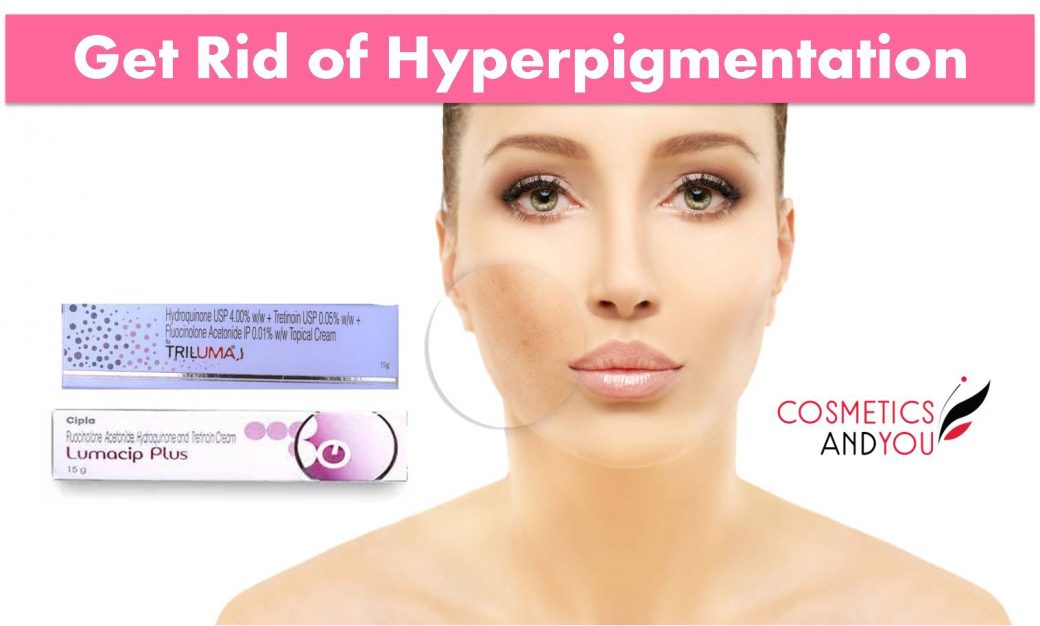
Along with sun protection measures, there are a few treatment options available to fix the skin problem. Prescription creams are available to lighten the skin and contain Hydroquinone, Tretinoin and Fluocinolone, which are considered the best topical medications for hyperpigmentation or melasma-associated brown spots. The most widely used triple combination therapies are Tri-Luma and Lumacip cream, which lighten the skin and fade darkened patches by slowing melanin pigment production, thereby allowing those dark patches to fade and even out the skin tone. The topical preparation contains hydroquinone, known for its bleaching properties. These treatments can be irritating to sensitive skin and usually take three to six months to show results.
Another option is a chemical peel, which can only be arranged by a dermatologist. The procedure involves the application of a chemical agent to the which cause the removal of superficial lesions. This results in a new skin and deeper tissues. For more information about such treatments, talk to your dermatologists.