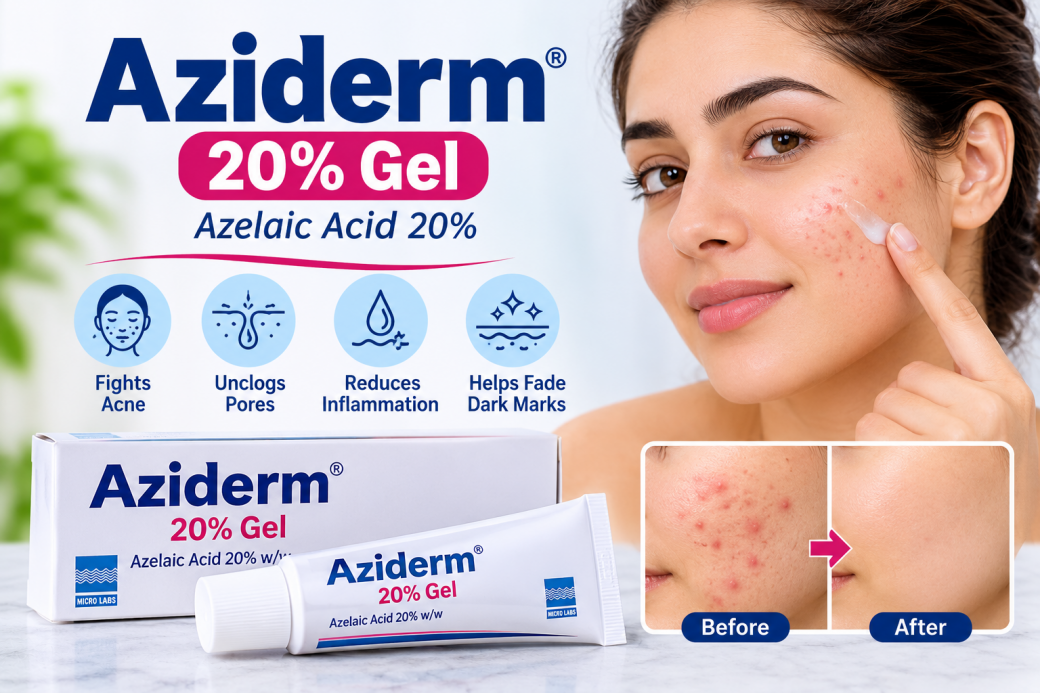
Acne is one of the most common skin concerns affecting teenagers and adults. Pimples, clogged pores, blackheads, whiteheads, and inflammation can affect not only skin appearance but also a person’s confidence. Finding an appropriate acne treatment is important for managing breakouts and maintaining healthier-looking skin.
Aziderm 20% Gel is a topical skincare medication containing 20% azelaic acid. It is commonly prescribed by dermatologists to help manage acne vulgaris. Its active ingredient has antibacterial, anti-inflammatory and skin-normalising properties that help address several factors involved in acne development.
Whether you experience occasional breakouts or persistent acne, understanding how Aziderm 20% Gel works, how to apply it, and what precautions to follow can help you make informed skincare decisions.
In this guide, we will explore its uses, potential benefits, application instructions, possible side effects and frequently asked questions.
1. What Is Aziderm 20% Gel?
Aziderm 20% Gel is a topical medication formulated with azelaic acid 20% w/w as its active ingredient. It is marketed by Micro Labs and is intended for external application to the skin.
Azelaic acid is a naturally occurring dicarboxylic acid that has several properties useful in dermatology. It helps reduce acne-causing bacteria, supports normal skin cell turnover, and helps calm inflammation.
The medication is primarily used to manage acne vulgaris, including inflammatory breakouts.
Acne can develop when excess oil, dead skin cells and bacteria contribute to blocked pores. This can lead to blackheads, whiteheads, pimples and inflamed lesions.
Azelaic acid works through several mechanisms to address these contributing factors.
Aziderm 20% Gel should be used according to a dermatologist’s instructions rather than treated as an ordinary cosmetic product.
2. What Is Aziderm 20% Gel Used For?
Aziderm 20% Gel is primarily used to treat acne.
A dermatologist may recommend it as part of an acne-management routine depending on the type and severity of the skin condition.
Acne Vulgaris
Acne vulgaris develops when hair follicles become blocked with oil and dead skin cells. Bacteria and inflammation can contribute to pimple formation.
Azelaic acid helps manage acne by reducing acne-associated bacterial activity and normalising skin cell growth and shedding.
It may help improve the appearance of:
- Inflammatory pimples
- Small acne bumps
- Blackheads
- Whiteheads
- Redness associated with acne
Post-Acne Marks
Some people experience dark spots after pimples heal. These marks are commonly known as post-inflammatory hyperpigmentation.
Azelaic acid can help reduce excess pigmentation by influencing melanin production in the skin.
However, Aziderm 20% Gel is not an instant skin-brightening treatment. Pigmentation improvement can take time, and treatment suitability depends on the cause of the discolouration.
Other Inflammatory Skin Concerns
Azelaic acid is also used in certain formulations for inflammatory rosacea. However, the approved or recommended uses depend on the formulation, concentration and country.
Do not assume that every azelaic acid product has the same indications. Consult a dermatologist before using Aziderm 20% Gel for a condition other than the one for which it was prescribed.
3. How Does Aziderm 20% Gel Work?
The active ingredient, azelaic 20% acid, works through multiple mechanisms that help manage acne.
Antibacterial action: Azelaic acid helps reduce the growth of bacteria associated with acne, including Cutibacterium acnes.
Comedolytic action: It helps normalise skin cell development and shedding. This can reduce the accumulation of dead skin cells that contribute to blocked pores.
Anti-inflammatory properties: Inflammation plays an important role in the development of red, swollen pimples. Azelaic acid helps reduce inflammatory activity in the skin.
Effect on pigmentation: Azelaic acid can inhibit tyrosinase, an enzyme involved in melanin production. This property may help improve certain types of dark marks left after acne.
Because it addresses several acne-related processes, azelaic acid can be a useful option in dermatologist-directed acne treatment.
4. Potential Benefits of Aziderm 20% Gel
When used appropriately, Aziderm 20% Gel may provide several benefits for people dealing with acne.
Helps Manage Acne Breakouts
Its antibacterial and anti-inflammatory properties help address factors involved in acne formation. Regular use as prescribed may reduce the number of active breakouts.
Helps Unclog Pores
By supporting normal skin-cell turnover, azelaic acid may help prevent the buildup of dead skin cells inside pores.
This can be beneficial for people who experience blackheads and whiteheads.
Supports Improvement in Post-Acne Marks
Azelaic acid can help improve some forms of post-inflammatory hyperpigmentation. This may gradually make dark marks less noticeable.
Helps Reduce Inflammation
Redness and swelling often accompany inflammatory acne. Azelaic acid’s anti-inflammatory properties can help improve these symptoms.
Suitable for Dermatologist-Directed Skincare Routines
Azelaic acid is an established topical dermatological ingredient. A dermatologist may recommend it alone or alongside other acne treatments depending on an individual’s skin condition.
Results vary from person to person, and the 20% concentration may irritate some users.
5. How to Apply Aziderm 20% Gel Correctly
Correct application helps you achieve the intended benefits while reducing the risk of irritation.
Follow these general application steps, along with your dermatologist’s instructions.
Step 1: Clean Your Skin
Wash the affected area using a gentle cleanser. Avoid harsh soaps, abrasive scrubs and strong exfoliating products.
Step 2: Dry Your Skin
Gently pat the area dry using a clean, soft towel. Avoid rubbing or irritating acne-prone skin.
Step 3: Apply a Thin Layer
Apply a small amount of Aziderm 20% Gel to the affected area as directed by your healthcare professional.
Do not apply a thick layer or use more product than prescribed.
Step 4: Spread Gently
Gently spread the gel over the intended treatment area. Avoid excessive rubbing.
Step 5: Wash Your Hands
Wash your hands after application unless your hands are part of the prescribed treatment area.
Step 6: Follow Your Skincare Routine
Use a gentle moisturiser and sunscreen as appropriate. Sunscreen is particularly important when managing acne marks and maintaining overall skin health.
Avoid contact with the eyes, mouth, lips and other sensitive areas.
6. How Often Should You Use Aziderm 20% Gel?
Application frequency depends on your skin condition, tolerance, and your dermatologist’s instructions.
Some azelaic acid preparations are used once or twice daily, but do not apply Aziderm 20% Gel at these frequencies without checking your prescription.
If you experience mild irritation, do not independently increase or change the application schedule.
Using more gel will not necessarily improve acne faster. Excessive application can increase the risk of burning, dryness and redness.
Consistency and following professional instructions are more important than applying larger quantities.
7. Possible Side Effects of Aziderm 20% Gel
Like other topical acne medications, Aziderm 20% Gel may cause side effects.
Not everyone experiences them, and their severity can vary depending on skin sensitivity and application habits.
Common application-site reactions include:
- Burning sensation
- Stinging or tingling
- Itching
- Skin dryness
- Redness
- Mild irritation
- Peeling or scaling
These reactions may be more noticeable when starting treatment.
When Should You Contact a Doctor?
Stop using the product and seek medical advice if you experience severe irritation, significant swelling, blistering or a persistent worsening of your skin condition.
Seek urgent medical attention if you develop signs of a serious allergic reaction, such as difficulty breathing or swelling of the face or throat.
Do not ignore persistent discomfort or assume that severe irritation is a normal part of acne treatment.
8. Precautions Before Using Aziderm 20% Gel
Before starting treatment, consider the following precautions.
Sensitive skin: People with sensitive or eczema-prone skin may experience increased irritation.
Damaged skin: Avoid applying the gel to open wounds, severely irritated skin or sunburned areas unless your doctor specifically advises otherwise.
Eye contact: Keep the medication away from the eyes and mucous membranes. If you accidentally get it in your eyes, rinse thoroughly with plenty of water.
Pregnancy and breastfeeding: Consult your healthcare professional before using azelaic acid during pregnancy or breastfeeding.
Other acne medications: Inform your dermatologist about other products you use, including retinoids, benzoyl peroxide, exfoliating acids and prescription acne treatments.
Allergies: Do not use the medication if you have a known allergy to azelaic acid or any of its ingredients.
Always read the product information and follow medical instructions.
9. Can You Use Aziderm 20% Gel With Other Skincare Products?
Many people use multiple skincare products to manage acne. However, combining several active ingredients can increase skin irritation.
A simple skincare routine is often a good starting point.
Gentle Cleanser
Choose a mild cleanser that removes dirt and excess oil without leaving your skin feeling overly dry.
Moisturiser
A non-comedogenic moisturiser can help maintain the skin barrier and reduce dryness.
Sunscreen
Use a broad-spectrum sunscreen with SPF 30 or higher during the day. It helps protect the skin from ultraviolet radiation and may prevent acne marks from becoming darker.
Other Active Ingredients
Ingredients such as retinoids, benzoyl peroxide and salicylic acid may be included in acne treatment plans.
However, combining them with 20% azelaic acid without professional guidance can cause excessive irritation.
Introduce new products carefully and follow your dermatologist’s recommendations.
10. How Long Does Aziderm 20% Gel Take to Show Results?
Acne treatment requires patience. Topical medications generally do not produce immediate results.
Some people may notice gradual improvement after several weeks of consistent treatment, while others may need a longer treatment period.
The response depends on several factors:
- Severity of acne
- Type of acne lesions
- Skin sensitivity
- Consistency of application
- Other skincare products being used
- Individual response to treatment
Dark acne marks may take longer to improve than active breakouts.
If your acne does not improve, becomes worse or remains troublesome, consult your dermatologist rather than increasing the amount of gel.
11. Skincare Tips to Support Acne Management
Along with prescribed treatment, healthy skincare habits can support acne management.
- Wash your face gently without excessive scrubbing.
- Avoid squeezing or picking pimples.
- Choose non-comedogenic skincare and makeup products.
- Remove makeup before sleeping.
- Clean pillowcases and frequently used face towels.
- Avoid frequently touching your face.
- Use sunscreen regularly.
- Maintain a consistent skincare routine.
Remember that acne is a medical skin condition, not necessarily a result of poor hygiene. Washing your face excessively can actually worsen irritation.